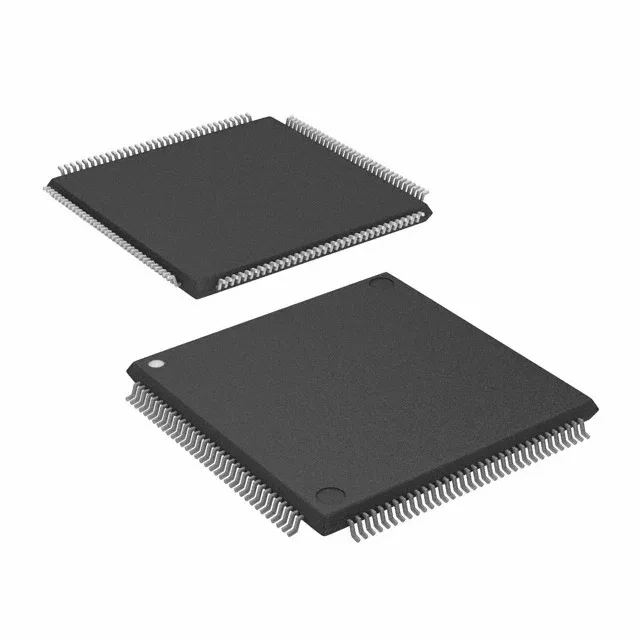
Intel EPM570T144A5N — FPGA / CPLD & Programmable Logic

EPM570T144A5N MAX II CPLD, 440 มาโครเซลล์, 5.4 ns

MPNEPM570T144A5N
Active

Altera MAX® II CPLD, EPM570T144A5N, 570 อีลีเมนต์ลอจิก, 440 มาโครเซลล์, tpd 5.4 ns, I/O 116 ขา, 144-LQFP, แหล่งจ่ายภายใน 2.5V/3.3V, -40°C ถึง 125°C

$69.0000Ref. price · indicative, final on quote
Independent supplier — new & surplus stockAuthenticity-screened · ESD-safe packingListing updated Aug 2026

Specifications

EPM570T144A5N specifications
ParameterValue
SeriesMAX® II
MountingSurface Mount
Programmable typeIn System Programmable
Voltage supply - internal2.5V, 3.3V
Operating temperature-40°C~125°C(TJ)
PackageTray
Number of i (O)116
Case144-LQFP
Number of macrocells440
Delay time tpd(1) max5.4 ns
Number of logic elements (Blocks)570

Product details

MAX II CPLD – ลอจิกเชื่อมประสาน (glue logic) เปิดใช้ทันที ใช้พลังงานต่ำ

Altera EPM570T144A5N คือ CPLD ตระกูล MAX® II ที่มีอีลีเมนต์ลอจิก 570 ตัวและมาโครเซลล์ 440 ตัวในแพ็กเกจ 144-LQFP ค่าหน่วงการแพร่ 5.4 ns (tpd1) เร็วพอสำหรับการถอดรหัสแอดเดรส การเชื่อมบัส และลอจิกควบคุมในระบบที่ไม่สามารถทนต่อความหน่วงเริ่มต้น (boot-up latency) ของ FPGA ได้ สถาปัตยกรรม MAX II ใช้โครงสร้างลุคอัพเทเบิล (LUT) พร้อมการคอนฟิกแฟลชแบบไม่ลบเลือน (non-volatile) ดังนั้นเมื่อจ่ายไฟจึงพร้อมขับ I/O ภายในไม่กี่ไมโครวินาที — ไม่ต้องใช้หน่วยความจำคอนฟิกภายนอก

tpd 5.4 ns – มาร์จินจังหวะเวลาสำหรับเส้นทางคอมบิเนชัน

ค่าหน่วงพินถึงพินสูงสุด 5.4 ns (tpd1) กำหนดพื้นความเร็วขั้นต่ำสำหรับลอจิกแบบรีจิสเตอร์ (registered) และคอมบิเนชัน

Frequently asked questions

What is the difference between EPM570T144A5N and EPM570T144C5N?

The difference is the temperature grade. The EPM570T144A5N is rated for -40°C to 125°C (industrial/automotive), while the EPM570T144C5N is the commercial-temperature variant (0°C to 70°C). All other specs — logic elements, macrocells, I/O, speed grade, package — are identical.

How to program the EPM570T144A5N with Quartus II?

The EPM570T144A5N is supported in Intel Quartus II software (version 13.0sp1 or later). Use the MAX II device family selection, assign the 144-LQFP package, and program via the JTAG interface using a Byte Blaster II or USB-Blaster cable. The device is in-system programmable and retains configuration in on-chip flash.