Logic density and timing for glue-logic consolidation
Core supply is 1.71 V to 1.89 V. In-system programmability via JTAG loads the firmware image after assembly.
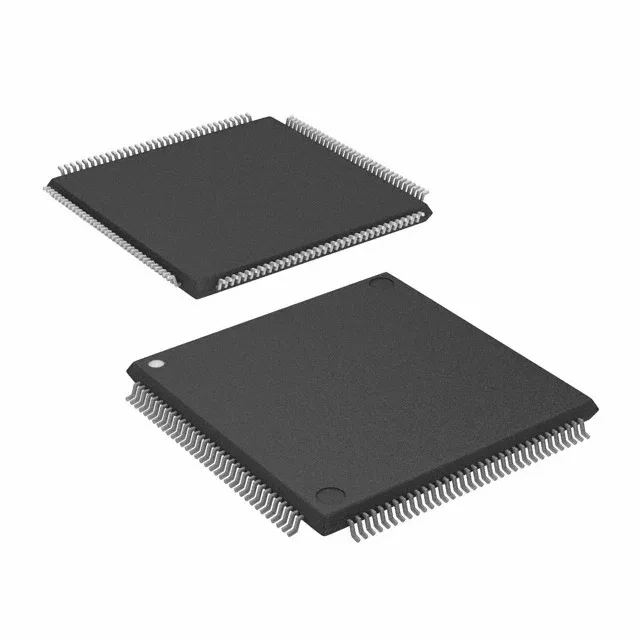
Intel MAX® II series, EPM570GT144C4, CPLD, 570 logic elements, 440 macrocells, 116 I/O, 5.4 ns tpd(1) max, 1.71 V ~ 1.89 V internal supply, 144-LQFP (144-TQFP 20x20), 0°C to 85°C operating temperature, In System Programmable.
| Parameter | Value |
|---|---|
| Series | MAX® II |
| Mounting | Surface Mount |
| Programmable type | In System Programmable |
| Voltage supply - internal | 1.71V ~ 1.89V |
| Operating temperature | 0°C~85°C(TJ) |
| Package | Tray |
| Number of i (O) | 116 |
| Case | 144-LQFP |
| Number of macrocells | 440 |
| Delay time tpd(1) max | 5.4 ns |
| Number of logic elements (Blocks) | 570 |
Core supply is 1.71 V to 1.89 V. In-system programmability via JTAG loads the firmware image after assembly.
Sourced and quoted to order through independent distribution. Submit an RFQ for current pricing and availability — no minimum commitment required.
The C5 suffix typically indicates a slower speed grade. The C4 carries a 5.4 ns tpd(1) max; the C5 would be slower. Confirm the exact C5 timing in its datasheet before substituting.
Yes, the device is In System Programmable via the JTAG interface. Any standard JTAG cable (USB-Blaster, etc.) that supports the MAX II family will work.
The 144-TQFP pinout is documented in the Intel MAX II datasheet. The base product number EPM570 shares the same pinout across the density variants in the same package.
No official replacement has been announced while the part is Active. If an EOL notice appears, Intel typically recommends the next-density MAX II or MAX 10 device — check the PCN for the exact pin-compatible substitute.