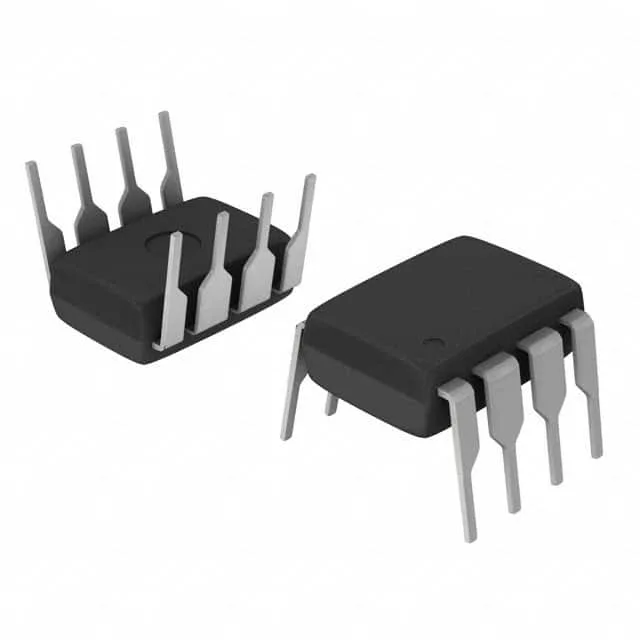
Vishay 6N136-X006 — Interface & Transceivers
Technical Documents PDF / CAD
RoHS Compliant · Lead-Free EIA-481 Standard
Vishay / Interface & Transceivers

6N136-X006 Optocoupler, 5300Vrms, 8-DIP Through Hole

MPN 6N136-X006
End of Life Spot Stock · 24-48h Dispatch 100% Original Sealed

6N136-X006 single-channel optocoupler, DC input, transistor with base output, 5300Vrms isolation, 200ns typ switching, 19% min CTR at 16mA, -55°C to 100°C, 8-DIP through-hole package, Tube.

In Stock: 880 pcs
MOQ: 1 pcs
Logistics: DHL / FedEx DAP (Global Express · 3-7d) Russia & CIS DDP (Door-to-Door Cleared)
Dispatch: Shenzhen / HK
Unit Price (USD)
$1.62 / pc
Direct Purchase Ready
Volume Pricing Breaks Confirmed upon quotation
1+ pcs
$1.62
10+ pcs
$1.46
30+ pcs
$1.33
100+ pcs
$1.20
500+ pcs
$1.12
Working on a production BOM or have a target unit price? Submit Target Price
Buy Now

$1.62 / ea

880 in stock — maximum per order · 3–4 days lead time

$1.46 / ea from 10 pcs

Upload Full BOM List
[SPEC] Essential Parameters Snapshot Full Specifications (14)
Package / Case 8-DIP (0.400", 10.16mm)
Output / Current 8mA
ALT
Facing long factory lead times or allocation on 6N136-X006? Verified pin-compatible alternatives available with active Shenzhen stock and 100% solder-ready footprint match.

Full Technical Specifications

14 Parameters
6N136-X006 specifications
Parameter / AttributeSpecification / Value
Input typeDC
Output typeTransistor with Base
MountingThrough Hole
Voltage - isolation5300Vrms
Voltage - output15V
Voltage - forward (Vf)1.33V
Current - output (Channel)8mA
Current transfer ratio19% @ 16mA
Current - DC forward (If)25 mA
Operating temperature-55°C ~ 100°C
PackageTube
Case8-DIP (0.400\", 10.16mm)
Channels1
Turn on (Turn off time)200ns, 200ns
100% Footprint Match · Solder-Ready (No PCB Redesign Needed)

Need Stock or a Drop-in Second-Source for 6N136-X006?

Package: DIP-8 / SOP-8 · Pin-compatible replacements with immediate Shenzhen spot stock

Footprint Match 97%
Supply Chain & Allocation Reality:

The 6N137 is the industrial signal isolator of servo drives, PLC I/O, gate-drive interfaces and serial links: a 10 megabit logic-gate optocoupler with a Schottky-clamped open-collector output, an enable pin, and the same 8-pin body as half the opto universe. Two things make it a page of its own. First, the 6N136 it shares a family name with is a 1 megabit phototransistor part whose pins 5, 6 and 7 mean something else entirely - same body, different species. Second, the enable pin: floating it disables the output to a permanent high, which is the number one mystery of hand-wired 6N137 circuits. The 2500V isolation, ~45-75ns delays and the HCPL-2601/2611 noise-shielded versions complete the working picture.

Verified Pin-Compatible Replacements (3 verified alternatives)

6N136 LiteOn / onsemi / Isocom DIP-8
Functional Equivalent
Availability & Target Pricing:

The 1Mbps Phototransistor Sibling

Shenzhen Spot Stock (24-48h Dispatch)

Electrical & Core Specs:

The phototransistor version in the same 8-pin body: no VCC pin, no enable pin, CTR-based output with a base pin (7) for a speed resistor, and about one megabit of bandwidth.

No logic supply at all - the output side is a transistor, not a gate: the pin that is VCC on a 6N137 is unused on the 6N136.

Compatibility & Drop-In Notes: The honest use of this card: replacing a slow part with the 10Mbps logic-gate family is an upgrade that needs decoupling and a pull-up; replacing the 137 with the 136 is a redesign that loses the enable, the logic output and the speed.
Package & Solder Footprint: Read the pin drawing, never the family name - the LED side matches, the output side does not.
Shenzhen Warehouse Stock & MOQ: Stocked; the slow lane with its differences stated.
HCPL-2601 Broadcom (HP lineage) DIP-8
100% Drop-in (Zero Code Change)
Availability & Target Pricing:

The Noise-Shielded Same Function

Shenzhen Spot Stock (24-48h Dispatch)

Electrical & Core Specs:

The same 10 megabit logic-gate design from the HP/Avago lineage with a specified improved internal noise shield - the minimum common-mode immunity is a guaranteed number where the 6N137 datasheets lean on typicals.

Same 5V logic side and enable-pin dance; the HCPL-2611 raises the guaranteed CMR further for the nastiest motor-drive corners.

Compatibility & Drop-In Notes: The choice rule: where a 6N137 works, the 2601 works identically; where a 6N137 glitches mysteriously near power switching, the specified-immunity part is the repair - not a faster pull-up.
Package & Solder Footprint: Pin-shared with the 6N137.
Shenzhen Warehouse Stock & MOQ: Stocked; the datacom-name version of the same socket.
EL2601 / ICPL2601 Everlight / Isocom (clone lineage) DIP-8 / SOP-8
100% Drop-in (Zero Code Change)
Availability & Target Pricing:

The Volume Clone Shelf

Shenzhen Spot Stock (24-48h Dispatch)

Electrical & Core Specs:

The industry clones of the 2601/6N137 function: 10 megabit, open-collector Schottky-clamped output, enable input, same pin map - at the price points that put them in serial and adapter hardware.

The enable pin carries its own discipline: about 5.5V maximum and never more than 500mV above VCC - a rule worth stating because it is the first pin killed in hand-built rigs.

Compatibility & Drop-In Notes: The clones exist because the original function is generic; the buying question is only whether the lot behind the price holds the datasheet numbers.
Package & Solder Footprint: Pin map identical to the 6N137/2601 line.
Shenzhen Warehouse Stock & MOQ: Volume pricing; sample-screened lots on request.
Buyer & Quality Checklist for Sourcing Alternatives
  • The enable pin (pin 7) has a truth table, not a default: tied high the output follows the input inverted (input high gives output low); floating or tied low it disables to a permanent high. The always-high 6N137 is almost always an orphaned enable pin.
  • The output is open-collector and inverting: it sinks when the input LED is on - a pull-up resistor is a functional part of the circuit, and positive-logic assumptions about the output polarity need the inversion designed in.
  • The 6N136 shares the body and moves the pins: on the 136, pins 5/6/7 are Emitter/Collector/Base (phototransistor world, no VCC, no enable); on the 137 they are GND/Output/Enable. Never swap across the two by position.
  • VCC (pin 8) is 4.5V to 5.5V with the 0.1uF bypass to pin 5 as part of the design: a 10 megabit part without its decoupling produces the intermittent glitches that get blamed on the processor.
  • The speed ladder inside the family is real: 6N135/6N136 are 1 megabit phototransistor parts; 6N137/6N138/6N139 are the 10 megabit logic-gate row, with 138/139 tuned for lower input current. Match the drive current and the bandwidth to the job.
  • Where it sits matters: these parts live between a controller and a power stage, and their specified common-mode immunity (the HCPL-2601/2611 grades) is the difference between a clean drive and a phantom fault in welder and servo environments.
Frequently Asked Technical Questions

Q: Can a 6N136 replace a 6N137?

A: Same 8-pin body, different species: the 6N136 is a 1 megabit phototransistor part with no VCC and no enable, and its pins 5, 6 and 7 are Emitter, Collector and Base where the 6N137 has GND, Output and Enable. The LED side matches; nothing else should be assumed.

Q: Why is my 6N137 output always high?

A: Two candidates: the enable pin (7) is floating or tied low, which disables the output to a permanent high, or the open-collector output is missing its pull-up resistor. Both are wiring facts, not part failures.

Q: What is the difference between the 6N137 and the HCPL-2601?

A: The same 10 megabit logic-gate function and pinout; the HCPL-2601 adds a specified improved noise shield (guaranteed common-mode immunity where the 6N137 relies on typicals), and the HCPL-2611 raises that guarantee further - the motor-drive grade of the same socket.

Technical Details & Description

5300Vrms isolation with 200ns switching — the high-speed optocoupler for galvanic isolation

The 6N136-X006 is a single-channel optocoupler from the 6N136 family, providing 5300Vrms of galvanic isolation between a DC input LED and a transistor-with-base output. Its 200ns typical turn-on and turn-off times place it in the high-speed optocoupler class, suited for digital isolation in industrial interfaces, motor drive feedback, and isolated data links where the 19% minimum current transfer ratio at 16mA forward current sets the LED drive budget.

What the 200ns switching and 19% CTR mean for the design

The 200ns propagation delay on both edges means this part can pass data at several megahertz without pulse-width distortion becoming the dominant error term — useful for isolated SPI, CAN, or RS-485 interfaces where timing margin matters. The 19% minimum CTR at 16mA forward current is the floor: with a 15V output maximum and 8mA output current capability, the designer sizes the LED resistor to guarantee the output transistor saturates into the downstream logic or load. At lower forward currents the CTR drops further, so the 16mA test condition is the practical operating point for reliable switching.

Frequently asked questions

What is the current transfer ratio (CTR) of 6N136?

The minimum CTR is 19% at 16mA forward current. This is the guaranteed floor; typical CTR at that drive level is higher.

What is the maximum input current for 6N136?

The maximum DC forward current is 25 mA.

Can 6N136 be replaced by 6N137?

The 6N137 is a different output type — it has a logic-level open-collector output with an enable pin, while the 6N136 has a transistor with base output. They are not pin-compatible replacements. The 6N136 is the right choice when you need access to the base terminal for external biasing or Miller-effect compensation.

6N136-X006
Verified Allocation
Quote