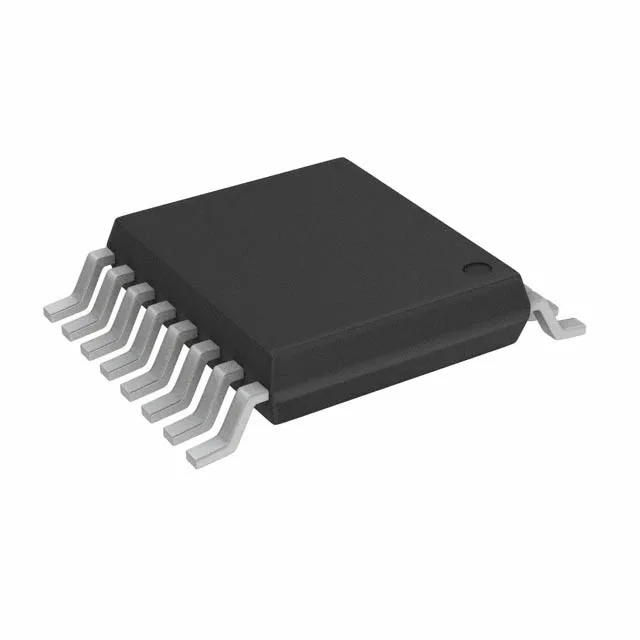
Toshiba Semiconductor 74VHC4052AFT — Interface & Transceivers

74VHC4052AFT Dual 4:1 Analog Mux, 37Ω, 230MHz, 16-TSSOP

MPN74VHC4052AFT
End of Life

Toshiba 74VHC4052AFT, dual 4:1 analog multiplexer/demultiplexer, SP4T switch circuit, 37Ω on-resistance, 230MHz -3dB bandwidth, 2V to 5.5V supply, 16-TSSOP package, -40°C to 85°C operating temperature.

$0.5Ref. price · indicative, final on quote
Packaging16-TSSOP (0.173", 4.40mm Width)
RoHSROHS3 Compliant
Independent supplier — new & surplus stockAuthenticity-screened · ESD-safe packingListing updated Jul 2026

Specifications

74VHC4052AFT specifications
ParameterValue
MountingSurface Mount
Voltage - supply, single (V+)2V ~ 5.5V
Current - leakage (IS(off))100nA
Operating temperature-40°C ~ 85°C (TA)
-3db bandwidth230MHz
PackageTape & Reel (TR); Cut Tape (CT)
Crosstalk-45dB @ 1MHz
Case16-TSSOP (0.173\", 4.40mm Width)
Switch circuitSP4T
Number of circuits2
On-State resistance37Ohm
Switch time (Ton, toff)12ns, 12ns
Multiplexer (Demultiplexer circuit)4:1
Channel-to-Channel matching (ΔRon)5Ohm
Channel capacitance (CS(off), CD(off))0.5pF, 13.1pF

Product details

Dual 4:1 analog mux with 230 MHz bandwidth

The Toshiba 74VHC4052AFT is a dual 4:1 analog multiplexer/demultiplexer — two independent SP4T switches in a single 16-TSSOP package. It routes analog or digital signals up to 230 MHz, with a maximum on-resistance of 37Ω and channel-to-channel matching within 5Ω.

On-resistance and crosstalk — what they mean for signal integrity

The 37Ω max on-resistance (Ron) sets the insertion loss in the signal path. For a 50Ω system, the mux adds about 0.6 dB of attenuation — acceptable for most video and RF chains, but worth budgeting if the signal is already near the noise floor. The 5Ω channel-to-channel matching (ΔRon) keeps gain errors consistent across channels, which matters when the mux feeds a differential ADC or a multi-channel data-acquisition front end. Crosstalk is specified at -45 dB at 1 MHz — a solid figure for a 2V to 5.5V CMOS mux. In practice, that means a 1 Vpp signal on one channel bleeds about 5.6 mV into an adjacent off-channel at 1 MHz. The 230 MHz -3 dB bandwidth confirms the switch can handle composite video (NTSC/PAL at ~5 MHz) or baseband digital signals up to 100+ MHz with minimal roll-off.

Supply rails and temperature range

The logic inputs are 5V-tolerant when VCC is at 3.3V, so a 3.3V MCU can drive the address and enable pins without level shifting.

Housed in a 16-TSSOP (4.40 mm body width), the 74VHC4052AFT uses the standard TSSOP-16 footprint — 0.65 mm pitch, 5.0 mm body length. The surface-mount package is suitable for reflow assembly; If the reel has been open beyond the floor-life window, a bake before reflow is the safe call.

Frequently asked questions

What is the on-resistance of 74VHC4052AFT?

This is the resistance between the common terminal and any selected channel when the switch is enabled.

Can I use 74VHC4052AFT with a 5V supply?

Yes, the single-supply range is 2V to 5.5V, so 5V is within the operating range. The logic inputs are 5V-tolerant when VCC is at 3.3V, and at 5V supply the switch handles analog signals rail-to-rail.

What package does 74VHC4052AFT come in?

It comes in a 16-TSSOP package with a 4.40 mm body width, 0.65 mm pitch. The supplier device package is 16-TSSOPB.

What is the closest pin-compatible alternative to 74VHC4052AFT?

Within the 74VHC4052 family, the SOIC-16 and SSOP-16 variants are functionally identical but have different footprints. For a drop-in replacement in the TSSOP-16 footprint, the 74VHC4052AFT is the only Toshiba variant in that package. Other manufacturers (e.g., NXP, TI) offer 74HC4052 or 74HCT4052 in TSSOP-16, but verify pin compatibility and supply voltage range — the HCT version requires 5V and has different logic thresholds.