What the 5000 Vrms and 100 Mbps mean for your isolation barrier
The TI ISO7741QDWRQ1 is a 4-channel, general-purpose digital isolator using capacitive coupling to provide 5000 Vrms of galvanic isolation across the barrier. That rating is the headline spec for any safety-critical design — it covers reinforced isolation requirements in automotive traction inverters, battery management systems, and on-board chargers where a fault on the high-voltage side must not propagate to the low-voltage control logic. The 100 Mbps data rate keeps up with high-speed SPI buses, isolated CAN transceivers, and fast digital I/O without adding propagation delay jitter. With a typical 16 ns propagation delay and 2.4 ns rise/fall times, this part fits into timing budgets that slower optocouplers or older capacitive isolators would miss.
For a procurement team, the AEC-Q100 mark is a gate check — if your BOM calls for automotive-grade components, this part satisfies that requirement without needing a separate qualification waiver.
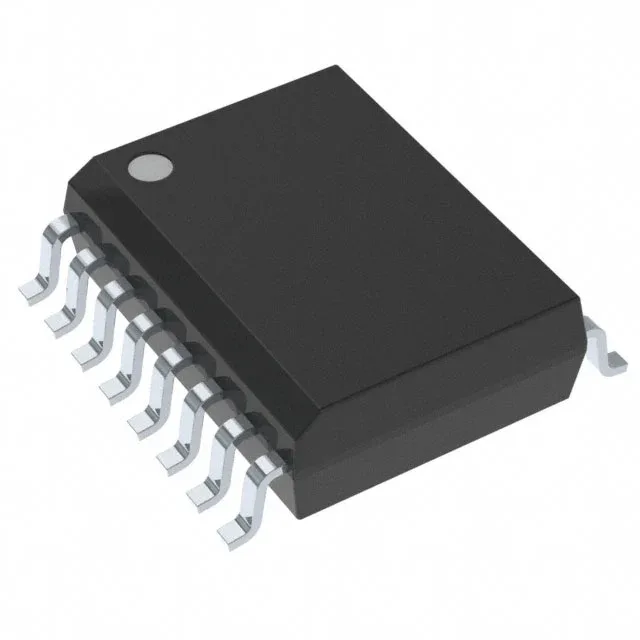
Package and mounting — 16-SOIC wide-body
The 16-SOIC wide-body package (7.50 mm body width) provides the creepage distance needed to sustain the 5000 Vrms isolation rating. It's a surface-mount part, so it runs through a standard reflow profile. No special handling beyond the usual MSL precautions — check the moisture-sensitive level on the reel label before the oven. The wide-body footprint is common enough that pick-and-place setups should have no trouble with centering or solder paste deposition.