Three-channel CAN isolator for automotive buses
It is AEC-Q100 qualified and provides 5000 Vrms galvanic isolation across a 2.25 V to 5.5 V supply range.
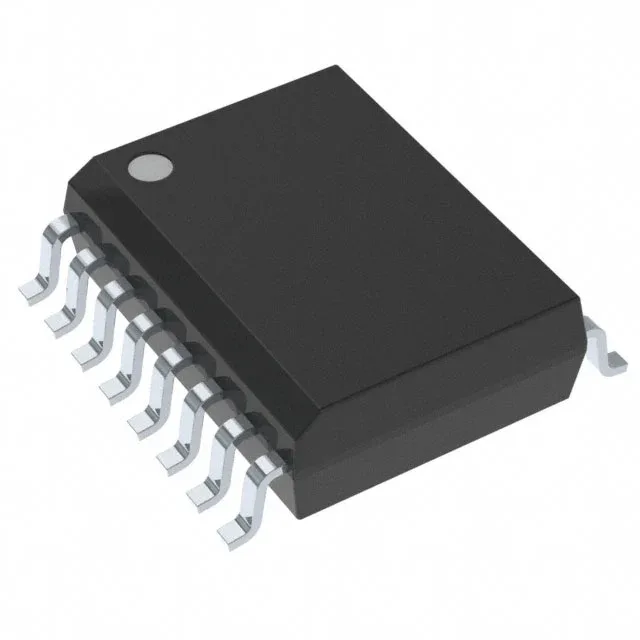
The 18 ns max propagation delay (both tpLH and tpHL) and 7 ns max pulse-width distortion preserve timing for CAN FD. Rise and fall times are a typical 2.6 ns. Supply voltage covers 2.25 V to 5.5 V on both sides. The 16-SOIC wide-body package (7.50 mm width) provides creepage for 5000 Vrms isolation.
It is a current-generation part from TI's automotive isolator family. For dual-sourcing or a pin-compatible alternate, the non-automotive ISO6731DWR shares the same 3/0 channel count, 50 Mbps data rate, and 16-SOIC footprint — the main difference is the absence of AEC-Q100 qualification, so it fits prototypes or non-automotive builds where the temperature range is still -40°C to 125°C.
Integration note
Surface-mount only — the 16-SOIC wide-body is hand-solderable. No isolated power on-chip; the bus-side transceiver needs its own rail. The 3/0 channel layout routes three signals from the CAN controller across the barrier.