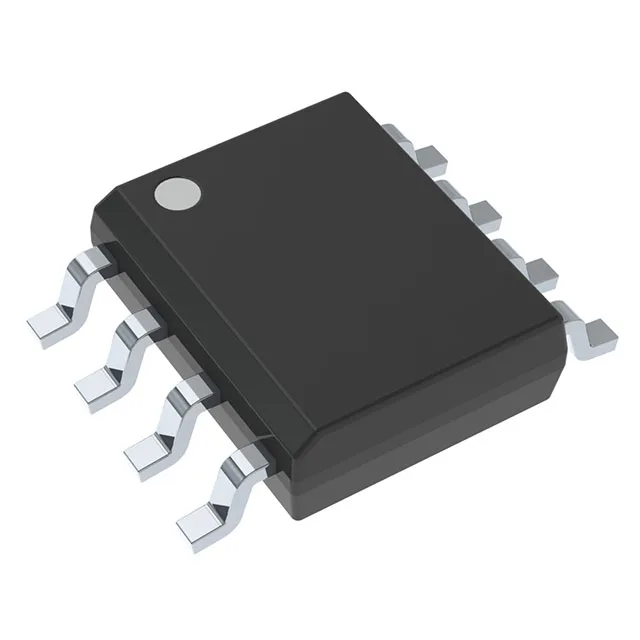
Texas Instruments ISO7221CDR — Digital Isolators

TI ISO7221CDR Digital Isolator, 2500Vrms, 25Mbps, 8-SOIC

MPNISO7221CDR
Active

Texas Instruments ISO7221CDR, General Purpose digital isolator, capacitive coupling, 2 unidirectional channels, 25Mbps data rate, 2500Vrms isolation, 8-SOIC package, -40°C to 125°C.

$3.9100Ref. price · indicative, final on quote
Packaging8-SOIC (0.154", 3.90mm Width)
RoHSROHS3 Compliant
Independent supplier — new & surplus stockAuthenticity-screened · ESD-safe packingListing updated Aug 2026

Specifications

ISO7221CDR specifications
ParameterValue
TypeGeneral Purpose
Channel typeUnidirectional
MountingSurface Mount
Voltage2.8V ~ 5.5V
Voltage - isolation2500Vrms
Isolated powerNo
Operating temperature-40°C ~ 125°C
Pulse width distortion2ns
PackageTape & Reel (TR) Cut Tape (CT)
Data rate25Mbps
TechnologyCapacitive Coupling
Case8-SOIC (0.154\", 3.90mm Width)
Channels2
Inputs - side 1/Side 21/1
Rise (Fall time)1ns, 1ns
Propagation delay tpLH (tpHL)42ns, 42ns
Common mode transient immunity25kV/µs

Product details

It passes signals across a 2500Vrms isolation barrier at data rates up to 25Mbps with typical rise/fall times of 1ns.

That figure matters in motor-drive environments where PWM switching couples fast voltage edges across the barrier — below that threshold, the output can glitch. The 25kV/µs rating is typical for this class and sufficient for most industrial drives; if you are working in a high-noise traction inverter or solar inverter, the ISO7721FBDWR offers 85kV/µs CMTI and 5kVrms isolation.

Frequently asked questions

What is the data rate of ISO7221CDR?

The maximum data rate is 25Mbps. That supports SPI at 20 MHz, UART up to 3 Mbps, and general-purpose I/O toggling without timing issues.

Does ISO7221CDR need an isolated power supply?

No — the ISO7221CDR does not include isolated power. Each side requires its own local supply (2.8V to 5.5V), and the isolation barrier only passes data, not power.

Is ISO7221CDR compatible with 5V logic?

Yes — the supply range of 2.8V to 5.5V covers both 3.3V and 5V logic. The inputs and outputs swing rail-to-rail, so no external level translation is needed when both sides use the same supply voltage.