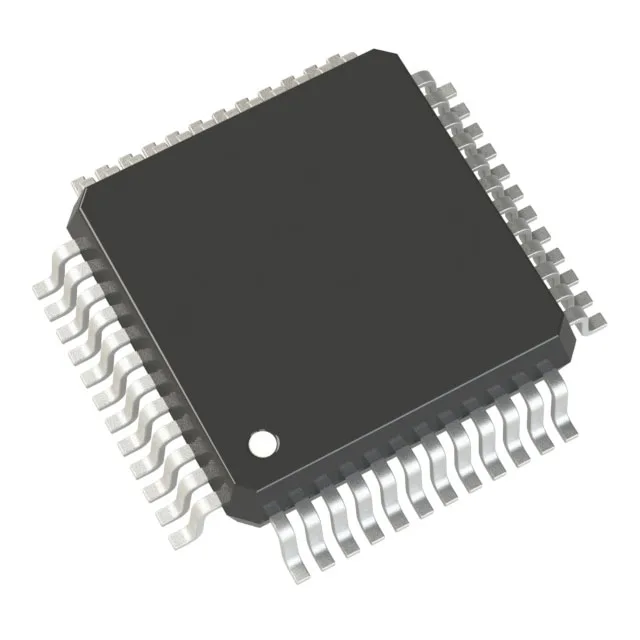
STMicroelectronics STM32F100C8T7B — Microcontrollers & Processors (MCU / MPU / DSP)

STM32F100C8T7B STM32F1 Cortex-M3 MCU, 24 MHz, 64 KB Flash

MPNSTM32F100C8T7B
Active

STMicroelectronics STM32F1 Value Line ARM Cortex-M3 MCU, 32-bit, 24 MHz, 64 KB Flash, 8 KB SRAM, 48-LQFP (7x7 mm), -40 to +105°C, ROHS3.

$5.2000Ref. price · indicative, final on quote
Packaging48-LQFP
RoHSROHS3 Compliant
SeriesSTM32F1
Independent supplier — new & surplus stockAuthenticity-screened · ESD-safe packingListing updated Aug 2026

Specifications

STM32F100C8T7B specifications
ParameterValue
SeriesSTM32F1
MountingSurface Mount
Oscillator typeInternal
Program memory typeFLASH
Voltage - supply (Vcc (Vdd))2V ~ 3.6V
Operating temperature-40°C ~ 105°C (TA)
Speed24MHz
PackageTray
RAM size8K x 8
Core size32-Bit Single-Core
PeripheralsDMA, PDR, POR, PVD, PWM, Temp Sensor, WDT
ConnectivityI²C, IrDA, LINbus, SPI, UART/USART
Number of i (O)37
Core processorARM® Cortex®-M3
Case48-LQFP
Data convertersA/D 10x12b; D/A 2x12b
Program memory size64KB (64K x 8)

Product details

Cortex-M3 core at 24 MHz — what the speed rating means for the BOM line

The STM32F100C8T7B: The 24 MHz ceiling is set by the internal oscillator and PLL; the core's single-cycle multiply and hardware divide mean the throughput in DMIPS is about 30 at 24 MHz, enough for sensor fusion, motor-control loops, or HMI keypads that don't need the full 72 MHz of the mainstream STM32F103.

Memory budget and peripheral set for embedded control

64 KB Flash and 8 KB SRAM are typical for a small control application: a motor-control FOC algorithm with Hall-sensor feedback fits in about 20 KB Flash and 3 KB RAM, leaving headroom for a bootloader and communication stack. The 10-channel 12-bit ADC (1 µs conversion time typical) and dual 12-bit DAC cover analog I/O without external converters. Connectivity includes I²C, SPI, two UART/USART with IrDA and LIN support — enough for a Modbus RTU slave, a sensor bus, and a debug console. The 37 I/O lines in a 48-pin package mean only 11 pins are dedicated to power, ground, and oscillator — high I/O density for the footprint.

Frequently asked questions

What is the closest functional alternative to STM32F100C8T7B?

The STM32L151CBU6A is a peer from the STM32L1 ultra-low-power series — same Cortex-M3 core, 32 MHz vs 24 MHz, 16-bit ADC channels, and USB connectivity. The packages differ (UFQFPN-48 vs LQFP-48), so they are not pin-compatible without a board layout change.