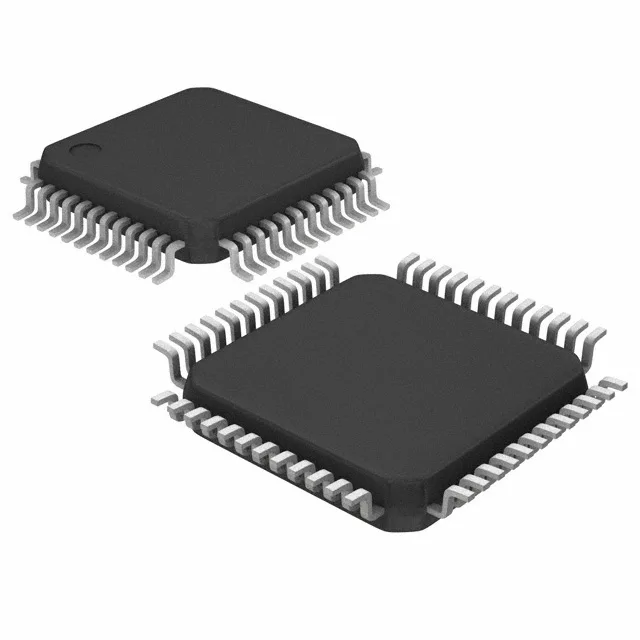
It is part of the STM32F1 value line, designed for cost-sensitive control applications where the full 72 MHz of the STM32F103 is not needed. The 24 MHz ceiling keeps the core power draw lower and lets you use a cheaper regulator — a 2V to 3.6V supply range means a 3.3V LDO with 200 mV dropout still holds the rail through a brief sag. The 37 I/O in a 48-LQFP package gives enough pins for a keypad, a small display, and a couple of serial buses without needing a bigger package.
32 KB Flash, 4 KB SRAM — sizing the firmware
The 4 KB SRAM means you will be managing buffers carefully; a UART DMA ring buffer of 256 bytes per channel eats into the budget fast. If your firmware needs OTA updates or a real-time OS with multiple tasks, look at the STM32F103 with 64 KB or 128 KB Flash and 20 KB SRAM instead.
Active lifecycle — no end-of-life worry
It is safe to qualify for a new production BOM today. The base product number is STM32F100, so any PCN or EOL notice from ST will reference that family. For dual-sourcing resilience, the STM32F100C6T6 (without the B suffix) is the same silicon in the same package — the B suffix indicates a tray-pack variant, not a functional difference.