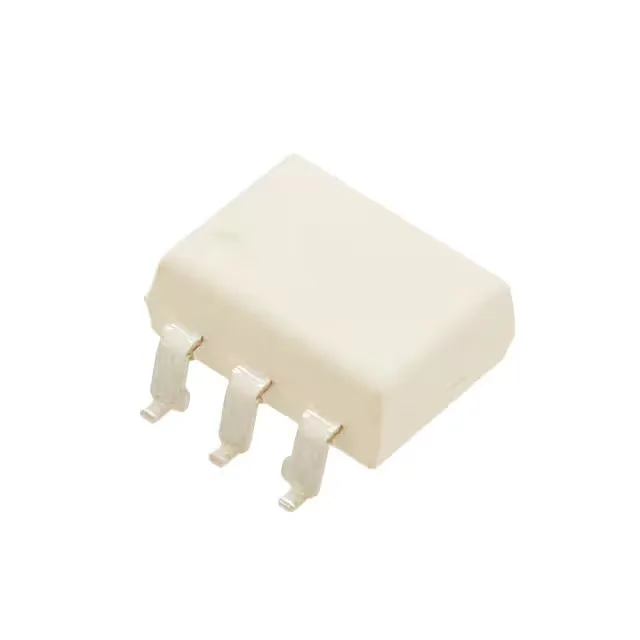
4170 Vrms isolation, AC/DC input — the fit for mains-referenced circuits
The onsemi H11AA4SR2VM is a single-channel optoisolator that accepts both AC and DC input, which sets it apart from the common DC-only input optocouplers. The 4170 Vrms isolation rating provides the galvanic separation needed between a mains-voltage line and a low-voltage control circuit — think AC line monitoring, zero-crossing detectors, or PLC digital inputs that must tolerate 240 VAC without coupling fault current across the barrier. Output is a phototransistor with base access, giving the designer the option to bias the base for faster switching or to configure a Darlington pair externally. The base pin is often left open in simple switch applications, but having it available means the part can be tuned for edge response in timing-critical circuits.
100% CTR floor — what the transfer ratio means for the BOM
The minimum current transfer ratio of 100% at If=10 mA guarantees that with 10 mA through the LED, the output transistor can sink at least 10 mA at Vce=10 V. This is the number that sets the LED series resistor and the load resistor on the output side: a 10 mA input drive gives you a known output current budget for the downstream logic or relay coil. Maximum Vce saturation is 400 mV at the rated output current, which keeps the voltage drop across the output transistor low enough to drive TTL or 5 V CMOS inputs without an additional buffer. The 50 mA maximum output current per channel and 30 V maximum output voltage cover the common 24 V industrial logic rail. Forward voltage is 1.17 V typical, with a maximum DC forward current of 60 mA.
The part is available in Tape & Reel and Cut Tape options, which suits both prototyping and production reel-feeder placement. The 6-SMD Gull Wing package has a standard footprint that reflows on a common lead-free profile with a peak temperature around 260 °C.