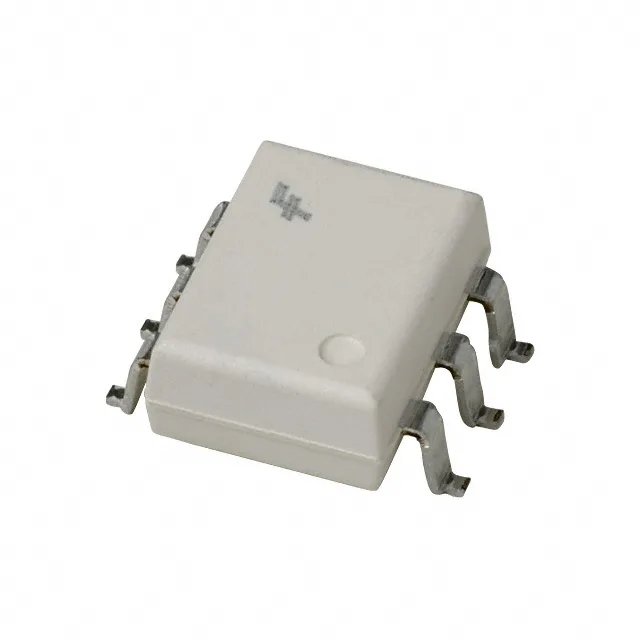
onsemi 4N37SR2VM — Optoisolators
Technical Documents PDF / CAD
RoHS Compliant · Lead-Free EIA-481 Standard
onsemi / Optoisolators

onsemi 4N37SR2VM Optoisolator – 4170Vrms, DC Input

MPN 4N37SR2VM
Active Spot Stock · 24-48h Dispatch 100% Original Sealed

onsemi 4N37SR2VM, single-channel DC-input optoisolator with transistor base output, 4170Vrms isolation, 100% CTR min at 10mA, surface-mount 6-SMD gull wing package, -40°C to 100°C.

In Stock: 1,800 pcs
MOQ: 1 pcs
Logistics: DHL / FedEx DAP (Global Express · 3-7d) Russia & CIS DDP (Door-to-Door Cleared)
Dispatch: Shenzhen / HK
Unit Price (USD)
$0.68 / pc
Direct Purchase Ready
Volume Pricing Breaks Confirmed upon quotation
1+ pcs
$0.68
10+ pcs
$0.61
30+ pcs
$0.56
100+ pcs
$0.50
500+ pcs
$0.47
1,000+ pcs
$0.44
Working on a production BOM or have a target unit price? Submit Target Price
Buy Now

$0.68 / ea

1,800 in stock — maximum per order · 3–4 days lead time

$0.61 / ea from 10 pcs

Upload Full BOM List
[SPEC] Essential Parameters Snapshot Full Specifications (14)
Package / Case 6-SMD, Gull Wing
ALT
Facing long factory lead times or allocation on 4N37SR2VM? Verified pin-compatible alternatives available with active Shenzhen stock and 100% solder-ready footprint match.

Full Technical Specifications

14 Parameters
4N37SR2VM specifications
Parameter / AttributeSpecification / Value
Input typeDC
Output typeTransistor with Base
MountingSurface Mount
Voltage - isolation4170Vrms
Voltage - output30V
Voltage - forward (Vf)1.18V
Current transfer ratio100% @ 10mA
Current - DC forward (If)60 mA
Operating temperature-40°C ~ 100°C
PackageTape & Reel (TR) Cut Tape (CT)
Case6-SMD, Gull Wing
Channels1
Vce saturation300mV
Turn on (Turn off time)2µs, 2µs
100% Footprint Match · Solder-Ready (No PCB Redesign Needed)

Need Stock or a Drop-in Second-Source for 4N37SR2VM?

Package: DIP-6 · Pin-compatible replacements with immediate Shenzhen spot stock

Footprint Match 98%
Supply Chain & Allocation Reality:

The 4N2x / 4N3x row is the general-purpose opto that predates the PC817 and still fills industrial boards, instruments and old audio gear: a 6-pin DIP with an infrared LED, a phototransistor, and one extra pin the 4-pin generation gave up - the base of the phototransistor, brought out for speed-up tricks and threshold trimming. The family is a CTR ladder wearing four part numbers: 4N25/26 at 20% minimum, 4N27/28 at 10%, and the 4N35/36/37 trio at 100% - one of the highest CTRs of any general-purpose opto, which is why it survives in circuits that need gain more than speed. Substituting within the row is honest work; substituting against the 4-pin PC817 row is the classic socket error.

Verified Pin-Compatible Replacements (4 verified alternatives)

4N25 onsemi / Vishay / Everlight DIP-6
100% Drop-in (Zero Code Change)
Availability & Target Pricing:

The 20% Rung - Same Socket, Real Numbers

Shenzhen Spot Stock (24-48h Dispatch)

Electrical & Core Specs:

The 20% minimum CTR member at 10mA LED current (same bin as the 4N26): the everyday grade of the row, pin-identical to every 4N2x and 4N3x part.

Standard 6-pin opto envelope: 5.3kV-class isolation in the classic parts, 30V-class collector-emitter ratings, pin 6 base exposed.

Compatibility & Drop-In Notes: Substitution inside the row must carry the CTR requirement: a 4N25 (20%) is a genuine downgrade from a 4N35 (100%) in any circuit that relied on the gain - the LED drive may need recomputing. The reverse is free margin.
Package & Solder Footprint: Standard 6-pin DIP; pinout 1 anode, 2 cathode, 3 NC, 4 emitter, 5 collector, 6 base.
Shenzhen Warehouse Stock & MOQ: Stocked across the row; the differences are documented per grade.
4N37 Everlight / Vishay / onsemi DIP-6
100% Drop-in (Zero Code Change)
Availability & Target Pricing:

The 100% CTR Rung

Shenzhen Spot Stock (24-48h Dispatch)

Electrical & Core Specs:

The high-gain member of the row: 100% minimum CTR at 10mA (40% guaranteed across the full temperature range), the reason it appears wherever the driving current must stay small.

Same envelope; isolation figure per the vendor grade (5.3kV class in the classic datasheets).

Compatibility & Drop-In Notes: The honest substitution sentence for this row: going up in CTR is always electrically kind; going down needs the drive budget re-derived - the 10mA figure in the datasheet assumes the LED the original design budgets for.
Package & Solder Footprint: Identical 6-pin DIP footprint.
Shenzhen Warehouse Stock & MOQ: Stocked as the high-gain repair part for marginal-drive circuits.
H11A1 Vishay / onsemi (legacy) DIP-6
Functional Equivalent
Availability & Target Pricing:

The Ancestor Row

Shenzhen Spot Stock (24-48h Dispatch)

Electrical & Core Specs:

The 6-pin row the 4N parts were defined alongside: H11A1 at 50% minimum CTR, H11A5 at 30% - same socket and base pin, its own gain ladder.

Same envelope and isolation class.

Compatibility & Drop-In Notes: In equipment documentation, a service manual often names the H11A part while the board carries a 4N one (or the reverse): the numbers are what matter, the names are lineage.
Package & Solder Footprint: Standard 6-pin DIP pinout.
Shenzhen Warehouse Stock & MOQ: Stocked for legacy equipment; verify markings on older lots.
PC817 Sharp / multiple DIP-4
Functional Equivalent
Availability & Target Pricing:

The 4-Pin Cousin - Different Socket

Shenzhen Spot Stock (24-48h Dispatch)

Electrical & Core Specs:

The 4-pin general-purpose opto of the next generation: same phototransistor idea without the base pin, and its own CTR rank system (A/B/C/D) that replaced the 4N CTR ladder in new designs.

Same functional envelope; 5kV-class isolation in the modern parts.

Compatibility & Drop-In Notes: When a service note says "PC817 replaces 4N35", it means functionally in some circuits - the socket does not agree. Fitting a 4-pin part into a 6-pin footprint needs the adapter or a new layout, and the base-pin behavior is gone either way.
Package & Solder Footprint: DIP-4 against DIP-6: different footprint by construction.
Shenzhen Warehouse Stock & MOQ: The modern volume part; see its own page for the rank system.
Buyer & Quality Checklist for Sourcing Alternatives
  • The CTR minimum is the specification: 4N25/4N26 = 20%, 4N27/4N28 = 10%, 4N35/4N36/4N37 = 100% (40% across the extended range). The 4N3x trio is the same sockets at five times the gain - the direction of every substitution follows this number.
  • Pin 6 (base) distinguishes this row from the 4-pin generation: a base-emitter resistor speeds the transistor up (trading gain for bandwidth), and a small bias trims the threshold. Designs that used it detect a replacement without it immediately - noise and edge behavior change.
  • The 4-pin PC817 row is not the same socket: no base pin, a different rank system (A-D), and a modern isolation class. Functionally comparable in many circuits, mechanically incompatible without an adapter.
  • LED drive is part of the gain budget: the CTR numbers assume 10mA of LED current. A circuit that halved its LED drive for efficiency cannot expect the original switching thresholds from the same grade.
  • The classic 6-pin bodies carry 5.3kV-class isolation figures - verify per vendor and grade; clone rows trade here first.
  • For repair of old gear, read the service manual part against the row: the H11A names and the 4N names cross freely in tables, and the CTR number is the only thing that transfers between them.
Frequently Asked Technical Questions

Q: What is the difference between 4N25 and 4N35?

A: Current transfer ratio: 4N25 is 20% minimum, 4N35 is 100% minimum (40% guaranteed over the extended temperature range). Same 6-pin socket and pinout; the 4N3x part is the high-gain version of the same design.

Q: What is pin 6 on a 4N35 used for?

A: The phototransistor base, brought out for design freedom: a base-emitter resistor speeds up switching, a small bias trims the effective threshold. It is also the physical difference from the 4-pin opto generation.

Q: Can I replace a 4N35 with a PC817?

A: Functionally similar in many circuits, but not socket-compatible - the PC817 is a 4-pin part without the base pin. Fitting one needs an adapter or a new layout, and the base-pin behavior is lost either way.

Technical Details & Description

Isolation barrier and output drive

The transistor output with base access gives you flexibility: you can bias the base for faster switching or tie it off for a standard phototransistor configuration.

Switching speed and temperature range

Typical turn-on and turn-off times are both 2 µs, which suits 100 kHz switching or slower — fine for isolated gate drives, status feedback, and 50/60 Hz zero-cross detection. If you need sub-microsecond response, look at a digital isolator or a high-speed optocoupler. The 30V maximum output voltage covers 24V logic and analog signal levels with headroom.

Surface-mount package and tape-and-reel

Housed in a 6-SMD gull-wing package, the 4N37SR2VM is a surface-mount variant of the classic 4N37 DIP. The gull-wing leads reduce stress on solder joints during thermal cycling compared to J-bend or leadless packages.

Frequently asked questions

What are the cross-reference or alternative parts for 4N37SR2VM?

The closest functional second-source within the same family is the 4N37SR2M — same die, same 4170Vrms isolation, same 100% CTR min at 10 mA, same 300mV Vce saturation. The 4N35SR2M and 4N25SR2M are also pin-compatible but differ in CTR and Vce saturation specs; check your drive margin before substituting.

4N37SR2VM
Verified Allocation
Quote