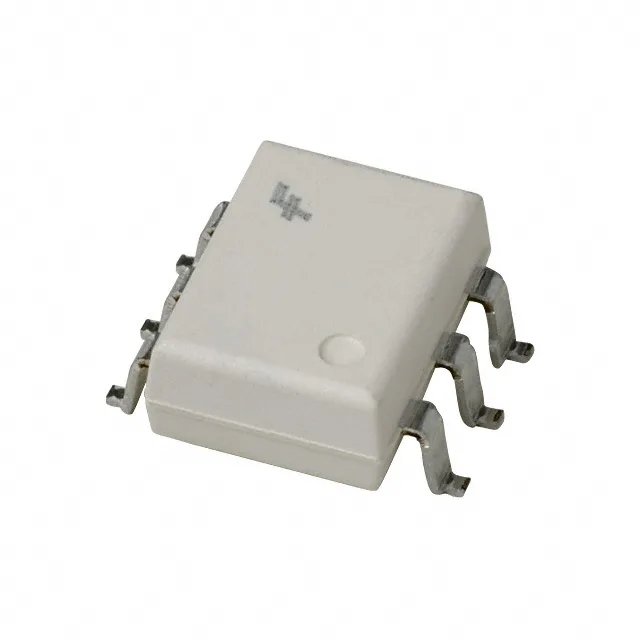
onsemi 4N26SM — Optoisolators

4N26SM Optoisolator – 4170Vrms, Transistor Output, onsemi

MPN4N26SM
Active

onsemi 4N26SM, single-channel DC-input optocoupler with transistor base output, 4170Vrms isolation, 20% min CTR at 10mA, 2µs switching, in a 6-SMD gull-wing package.

$0.7200Ref. price · indicative, final on quote
Packaging6-SMD, Gull Wing
RoHSROHS3 Compliant
Independent supplier — new & surplus stockAuthenticity-screened · ESD-safe packingListing updated Aug 2026

Specifications

4N26SM specifications
ParameterValue
Input typeDC
Output typeTransistor with Base
MountingSurface Mount
Voltage - isolation4170Vrms
Voltage - output30V
Voltage - forward (Vf)1.18V
Current transfer ratio20% @ 10mA
Current - DC forward (If)60 mA
Operating temperature-40°C ~ 100°C
PackageTube
Case6-SMD, Gull Wing
Channels1
Vce saturation500mV
Turn on (Turn off time)2µs, 2µs

Product details

Isolation barrier and output drive

The 4N26SM is a single-channel optocoupler from onsemi with a DC input and a phototransistor output that brings the base terminal out. The typical forward voltage of 1.18V and maximum forward current of 60mA define the input-side resistor and LED current budget.

Switching speed and saturation

Turn-on and turn-off times are both 2µs typical, which limits the usable signalling rate to roughly 250 kbps before pulse-width distortion becomes significant. The 500mV maximum Vce saturation at the output ensures low voltage drop when the transistor is on, keeping power dissipation in the output stage manageable. Compared to the 4N35SM, which specifies a 300mV Vce saturation, the 4N26SM has a higher saturation ceiling — a consideration when driving loads near the 30V output maximum where headroom is tighter.

Package, temperature range, and compliance

The 4N26SM is supplied in a tube of surface-mount 6-SMD gull-wing packages.

Frequently asked questions

What is the current transfer ratio (CTR) of the 4N26SM?

The minimum CTR is 20% at 10mA forward current. At 10mA LED drive, the output transistor can sink at least 2mA.

What is the difference between the 4N26 and the 4N26SM?

The 4N26 is the through-hole DIP version; the 4N26SM is the surface-mount gull-wing variant. All electrical specifications are identical.

Is the 4N26SM RoHS compliant?

Yes, the 4N26SM is ROHS3 compliant per onsemi's lifecycle data.