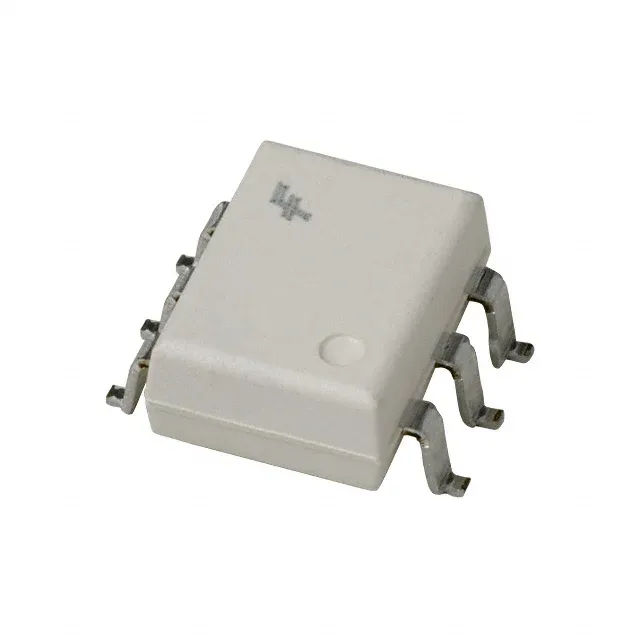
onsemi H11A23SD — Optoisolators

onsemi H11A23SD Optoisolator, 5300Vrms, 6-SMD Gull Wing

MPNH11A23SD
Obsolete

onsemi H11A23SD optoisolator, 1-channel, DC input, transistor with base output, 5300Vrms isolation, 20% CTR min @ 10mA, 6-SMD Gull Wing, Tape & Reel.

Independent supplier — new & surplus stockAuthenticity-screened · ESD-safe packingListing updated Jul 2026

Specifications

H11A23SD specifications
ParameterValue
Input typeDC
Output typeTransistor with Base
MountingSurface Mount
Voltage - isolation5300Vrms
Voltage - output30V
Voltage - forward (Vf)1.18V
Current transfer ratio20% @ 10mA
Current - DC forward (If)100 mA
Operating temperature-55°C~100°C
PackageTape & Reel (TR)
Case6-SMD, Gull Wing
Channels1
Vce saturation400mV
Turn on (Turn off time)2µs, 2µs

Product details

The onsemi H11A23SD is a single-channel optoisolator in a 6-SMD Gull Wing package, combining a DC-input LED with a phototransistor output that has a base terminal brought out for external bias or speed-up networks. Rated for 5300Vrms isolation, it provides a reinforced safety barrier between the input and output circuits — suitable for motor-drive feedback, PLC digital inputs, and medical equipment where galvanic separation is mandatory. Typical turn-on and turn-off times are 2µs each, supporting signal frequencies up to roughly 250kHz before the output waveform degrades — fast enough for most serial data and PWM isolation applications.

Temperature range and environment

Operating over -55°C to 100°C, the H11A23SD covers the full industrial temperature envelope — from cold-start outdoor equipment to warm cabinet interiors near power supplies. The 6-SMD Gull Wing footprint is compatible with standard reflow soldering profiles; the package sits on the board surface, so no through-hole holes are needed in the PCB layout.

Frequently asked questions

What is the closest pin-compatible alternative to the H11A23SD?

No official pin-compatible successor is recorded for the H11A23SD. Within the H11A family, other CTR and package variants exist, but each must be verified against the original BOM's required current transfer ratio, isolation voltage, and footprint before substitution.