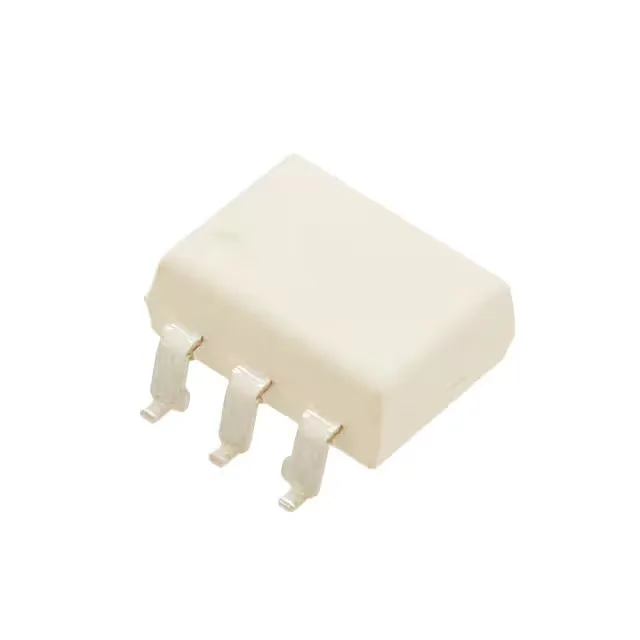
onsemi H11A1SR2VM — Optoisolators

onsemi H11A1SR2VM Optoisolator, 4170Vrms, 6-SMD

MPNH11A1SR2VM
Active

onsemi H11A1SR2VM single-channel DC-input optoisolator, transistor with base output, 4170Vrms isolation, 50% min CTR at 10mA, 6-SMD gull wing package, surface mount, -40°C to 100°C.

$0.7100Ref. price · indicative, final on quote
Packaging6-SMD, Gull Wing
RoHSROHS3 Compliant
Independent supplier — new & surplus stockAuthenticity-screened · ESD-safe packingListing updated Aug 2026

Specifications

H11A1SR2VM specifications
ParameterValue
Input typeDC
Output typeTransistor with Base
MountingSurface Mount
Voltage - isolation4170Vrms
Voltage - output30V
Voltage - forward (Vf)1.18V
Current transfer ratio50% @ 10mA
Current - DC forward (If)60 mA
Operating temperature-40°C~100°C
PackageTape & Reel (TR); Cut Tape (CT)
Case6-SMD, Gull Wing
Channels1
Vce saturation400mV
Turn on (Turn off time)2µs, 2µs

Product details

4170 Vrms isolation and the transistor-with-base output

The H11A1SR2VM is a single-channel DC-input optoisolator from onsemi with a transistor-with-base output, rated for 4170 Vrms of isolation between input and output.

CTR and switching speed — what they mean for the drive circuit

The minimum current transfer ratio (CTR) is 50% at a forward current of 10 mA. This means that with 10 mA through the input LED, the output transistor can sink at least 5 mA. The CTR sets the minimum input current needed to guarantee the output switches on; for a given load resistor on the output side, you calculate the required If from the CTR floor. The typical turn-on and turn-off times are both 2 µs, which supports switching frequencies up to roughly 100 kHz in digital isolation applications, though the actual data rate depends on the output pull-up resistor and load capacitance.

Surface-mount package and temperature range

Housed in a 6-SMD gull-wing package (supplier device package 6-SMD), this part is designed for standard reflow soldering. The 30 V maximum output voltage and 400 mV maximum Vce saturation mean the output transistor can interface with 5 V, 12 V, or 24 V logic rails with minimal voltage drop across the transistor when on.

Frequently asked questions

Will H11A1SR2VM drop into a board designed for 4N25SR2M?

The H11A1SR2VM and 4N25SR2M share the same package (6-SMD gull wing), same channel count, same DC input type, same transistor-with-base output, and similar isolation voltage (4170 Vrms). The 4N25SR2M has a higher Vce saturation (500 mV vs 400 mV) but otherwise the parametric overlap is close enough that the H11A1SR2VM is a functional drop-in for most applications. Confirm the CTR and switching speed match your drive circuit.