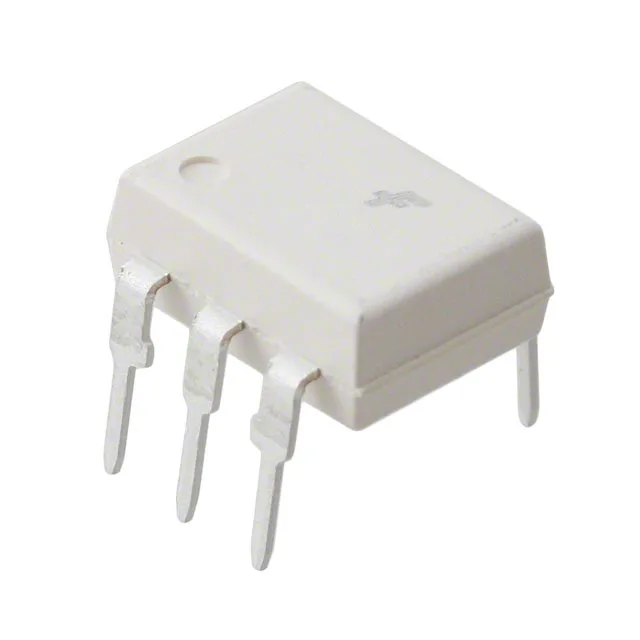
onsemi H11A1300 — Optoisolators

onsemi H11A1300 Optoisolator, 5300 Vrms, 1-Ch, 6-DIP

MPNH11A1300
Obsolete

onsemi H11A1300 optoisolator, 1-channel, DC input, transistor with base output, 5300 Vrms isolation, 6-DIP through-hole, tube.

$0.6200Ref. price · indicative, final on quote
Independent supplier — new & surplus stockAuthenticity-screened · ESD-safe packingListing updated Jul 2026

Specifications

H11A1300 specifications
ParameterValue
Input typeDC
Output typeTransistor with Base
MountingThrough Hole
Voltage - isolation5300Vrms
Voltage - output30V
Voltage - forward (Vf)1.18V
Current transfer ratio50% @ 10mA
Current - DC forward (If)100 mA
Operating temperature-55°C ~ 100°C
PackageTube
Case6-DIP (0.300\", 7.62mm)
Channels1
Vce saturation400mV
Turn on (Turn off time)2µs, 2µs

Product details

Isolation and switching performance

The H11A1300 provides 5300 Vrms galvanic isolation between input and output — sufficient for reinforced insulation in mains-referenced control circuits where the optocoupler bridges a safety barrier. Minimum current transfer ratio of 50% at 10 mA forward current means the output transistor saturates reliably with modest LED drive, leaving margin for CTR degradation over life. Typical turn-on and turn-off times of 2 µs each suit the H11A1300 for switching signals up to about 250 kHz — fast enough for PLC digital inputs, relay drivers, and isolated gate drive interfaces.

Package and board-fit for through-hole assembly

Supplied in tubes, so pick-and-place is manual or tube-fed; the through-hole leads are solderable in wave or selective-solder processes without MSL concerns.

Frequently asked questions

What is the closest pin-compatible alternative to H11A1300 in the onsemi optoisolator family?

No official pin-compatible successor is recorded for the H11A1300. Other 6-DIP optocouplers with transistor output from onsemi (such as the H11A817 series) share the same footprint but differ in CTR, isolation voltage, or switching speed — verify the BOM's parametric requirements before substituting.