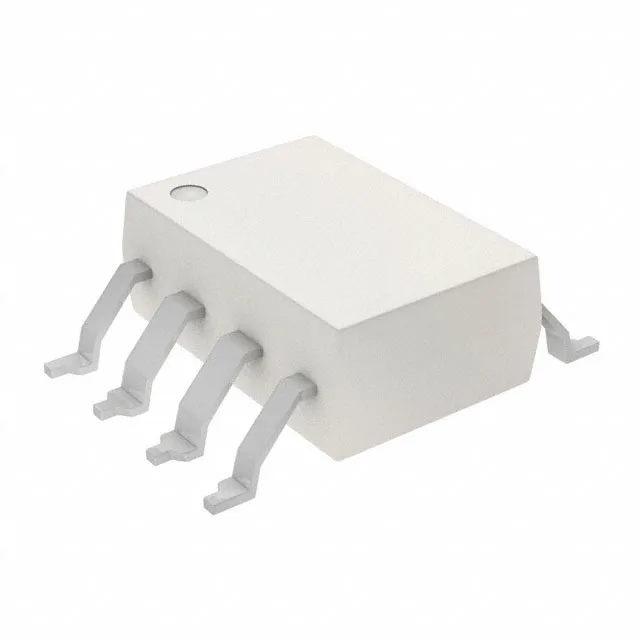
onsemi 6N137TSVM — Optoisolators
Technical Documents PDF / CAD
RoHS Compliant · Lead-Free EIA-481 Standard
onsemi / Optoisolators

6N137TSVM onsemi Optoisolator – 10 Mbps, 5000 Vrms

MPN 6N137TSVM
Active Spot Stock · 24-48h Dispatch 100% Original Sealed

onsemi 6N137TSVM, single-channel optocoupler, 10 Mbps data rate, 5000 Vrms isolation, open-collector output, 8-SMD gull-wing package

In Stock: 3,000 pcs
MOQ: 1 pcs
Logistics: DHL / FedEx DAP (Global Express · 3-7d) Russia & CIS DDP (Door-to-Door Cleared)
Dispatch: Shenzhen / HK
Unit Price (USD)
$1.75 / pc
Direct Purchase Ready
Volume Pricing Breaks Confirmed upon quotation
1+ pcs
$1.75
10+ pcs
$1.58
30+ pcs
$1.44
100+ pcs
$1.30
500+ pcs
$1.21
1,000+ pcs
$1.14
Working on a production BOM or have a target unit price? Submit Target Price
Buy Now

$1.75 / ea

3,000 in stock — maximum per order · 3–4 days lead time

$1.58 / ea from 10 pcs

Upload Full BOM List
[SPEC] Essential Parameters Snapshot Full Specifications (17)
Package / Case 8-SMD, Gull Wing
Supply Voltage 4.5V ~ 5.5V
Output / Current 50 mA
ALT
Facing long factory lead times or allocation on 6N137TSVM? Verified pin-compatible alternatives available with active Shenzhen stock and 100% solder-ready footprint match.

Full Technical Specifications

17 Parameters
6N137TSVM specifications
Parameter / AttributeSpecification / Value
Input typeDC
Output typeOpen Collector
MountingSurface Mount
Supply voltage4.5V ~ 5.5V
Voltage - isolation5000Vrms
Voltage - forward (Vf)1.45V
Current - output (Channel)50 mA
Current - DC forward (If)50mA
Operating temperature-40°C ~ 100°C
PackageTube
Data rate10Mbps
Case8-SMD, Gull Wing
Channels1
Inputs - side 1/Side 21/0
Rise (Fall time)30ns, 10ns
Propagation delay tpLH (tpHL)75ns, 75ns
Common mode transient immunity10kV/µs (Typ)
100% Footprint Match · Solder-Ready (No PCB Redesign Needed)

Need Stock or a Drop-in Second-Source for 6N137TSVM?

Package: DIP-8 / SOP-8 · Pin-compatible replacements with immediate Shenzhen spot stock

Footprint Match 97%
Supply Chain & Allocation Reality:

The 6N137 is the industrial signal isolator of servo drives, PLC I/O, gate-drive interfaces and serial links: a 10 megabit logic-gate optocoupler with a Schottky-clamped open-collector output, an enable pin, and the same 8-pin body as half the opto universe. Two things make it a page of its own. First, the 6N136 it shares a family name with is a 1 megabit phototransistor part whose pins 5, 6 and 7 mean something else entirely - same body, different species. Second, the enable pin: floating it disables the output to a permanent high, which is the number one mystery of hand-wired 6N137 circuits. The 2500V isolation, ~45-75ns delays and the HCPL-2601/2611 noise-shielded versions complete the working picture.

Verified Pin-Compatible Replacements (3 verified alternatives)

6N136 LiteOn / onsemi / Isocom DIP-8
Functional Equivalent
Availability & Target Pricing:

The 1Mbps Phototransistor Sibling

Shenzhen Spot Stock (24-48h Dispatch)

Electrical & Core Specs:

The phototransistor version in the same 8-pin body: no VCC pin, no enable pin, CTR-based output with a base pin (7) for a speed resistor, and about one megabit of bandwidth.

No logic supply at all - the output side is a transistor, not a gate: the pin that is VCC on a 6N137 is unused on the 6N136.

Compatibility & Drop-In Notes: The honest use of this card: replacing a slow part with the 10Mbps logic-gate family is an upgrade that needs decoupling and a pull-up; replacing the 137 with the 136 is a redesign that loses the enable, the logic output and the speed.
Package & Solder Footprint: Read the pin drawing, never the family name - the LED side matches, the output side does not.
Shenzhen Warehouse Stock & MOQ: Stocked; the slow lane with its differences stated.
HCPL-2601 Broadcom (HP lineage) DIP-8
100% Drop-in (Zero Code Change)
Availability & Target Pricing:

The Noise-Shielded Same Function

Shenzhen Spot Stock (24-48h Dispatch)

Electrical & Core Specs:

The same 10 megabit logic-gate design from the HP/Avago lineage with a specified improved internal noise shield - the minimum common-mode immunity is a guaranteed number where the 6N137 datasheets lean on typicals.

Same 5V logic side and enable-pin dance; the HCPL-2611 raises the guaranteed CMR further for the nastiest motor-drive corners.

Compatibility & Drop-In Notes: The choice rule: where a 6N137 works, the 2601 works identically; where a 6N137 glitches mysteriously near power switching, the specified-immunity part is the repair - not a faster pull-up.
Package & Solder Footprint: Pin-shared with the 6N137.
Shenzhen Warehouse Stock & MOQ: Stocked; the datacom-name version of the same socket.
EL2601 / ICPL2601 Everlight / Isocom (clone lineage) DIP-8 / SOP-8
100% Drop-in (Zero Code Change)
Availability & Target Pricing:

The Volume Clone Shelf

Shenzhen Spot Stock (24-48h Dispatch)

Electrical & Core Specs:

The industry clones of the 2601/6N137 function: 10 megabit, open-collector Schottky-clamped output, enable input, same pin map - at the price points that put them in serial and adapter hardware.

The enable pin carries its own discipline: about 5.5V maximum and never more than 500mV above VCC - a rule worth stating because it is the first pin killed in hand-built rigs.

Compatibility & Drop-In Notes: The clones exist because the original function is generic; the buying question is only whether the lot behind the price holds the datasheet numbers.
Package & Solder Footprint: Pin map identical to the 6N137/2601 line.
Shenzhen Warehouse Stock & MOQ: Volume pricing; sample-screened lots on request.
Buyer & Quality Checklist for Sourcing Alternatives
  • The enable pin (pin 7) has a truth table, not a default: tied high the output follows the input inverted (input high gives output low); floating or tied low it disables to a permanent high. The always-high 6N137 is almost always an orphaned enable pin.
  • The output is open-collector and inverting: it sinks when the input LED is on - a pull-up resistor is a functional part of the circuit, and positive-logic assumptions about the output polarity need the inversion designed in.
  • The 6N136 shares the body and moves the pins: on the 136, pins 5/6/7 are Emitter/Collector/Base (phototransistor world, no VCC, no enable); on the 137 they are GND/Output/Enable. Never swap across the two by position.
  • VCC (pin 8) is 4.5V to 5.5V with the 0.1uF bypass to pin 5 as part of the design: a 10 megabit part without its decoupling produces the intermittent glitches that get blamed on the processor.
  • The speed ladder inside the family is real: 6N135/6N136 are 1 megabit phototransistor parts; 6N137/6N138/6N139 are the 10 megabit logic-gate row, with 138/139 tuned for lower input current. Match the drive current and the bandwidth to the job.
  • Where it sits matters: these parts live between a controller and a power stage, and their specified common-mode immunity (the HCPL-2601/2611 grades) is the difference between a clean drive and a phantom fault in welder and servo environments.
Frequently Asked Technical Questions

Q: Can a 6N136 replace a 6N137?

A: Same 8-pin body, different species: the 6N136 is a 1 megabit phototransistor part with no VCC and no enable, and its pins 5, 6 and 7 are Emitter, Collector and Base where the 6N137 has GND, Output and Enable. The LED side matches; nothing else should be assumed.

Q: Why is my 6N137 output always high?

A: Two candidates: the enable pin (7) is floating or tied low, which disables the output to a permanent high, or the open-collector output is missing its pull-up resistor. Both are wiring facts, not part failures.

Q: What is the difference between the 6N137 and the HCPL-2601?

A: The same 10 megabit logic-gate function and pinout; the HCPL-2601 adds a specified improved noise shield (guaranteed common-mode immunity where the 6N137 relies on typicals), and the HCPL-2611 raises that guarantee further - the motor-drive grade of the same socket.

Technical Details & Description

10 Mbps open-collector optocoupler with 5000 Vrms isolation

The 6N137TSVM is a single-channel optocoupler from onsemi that switches at 10 Mbps and delivers a 5000 Vrms isolation barrier — the combination that makes it a standard choice for isolating digital buses like CAN, RS-485, or logic-level signals where you need galvanic separation without sacrificing speed. The open-collector output sinks up to 50 mA and runs on a 4.5 V to 5.5 V supply, so it mates directly with 5 V logic families without a level translator.

75 ns propagation delay and 10 kV/µs CMTI

Maximum propagation delay is 75 ns in both directions (tpLH and tpHL), and the typical rise/fall times are 30 ns and 10 ns respectively — these numbers set the timing budget for the isolation channel and must be accounted for in the system's worst-case signal path.

Active production with ROHS3 compliance

It comes in a tube of 8-SMD gull-wing parts (package/case 8-SMD, Gull Wing), a surface-mount footprint that saves board space compared to the through-hole DIP-8 variant of the same base device.

Supply and forward current limits

The LED side needs a forward voltage of 1.45 V typical and a maximum DC forward current of 50 mA — a standard 330 Ω series resistor from a 5 V logic output will bias the LED within limits.

Frequently asked questions

What is the data rate of the 6N137TSVM?

The 6N137TSVM is rated for a 10 Mbps data rate. The maximum propagation delay is 75 ns in both directions, which supports the 10 Mbps switching speed when the timing budget is properly allocated.

Can 6N137TSVM replace a standard 6N137?

The 6N137TSVM is a surface-mount variant of the base 6N137 family. It shares the same electrical ratings (10 Mbps, 5000 Vrms, open collector) but comes in an 8-SMD gull-wing package instead of a through-hole DIP-8. If your board layout expects a surface-mount footprint and the supply voltage is 5 V, it is a functional drop-in for the same isolation and speed requirements.

Is the 6N137TSVM compatible with 5 V logic?

Yes. The supply voltage range is 4.5 V to 5.5 V, and the forward voltage of the input LED is 1.45 V typical. A 5 V logic output driving the LED through a current-limiting resistor (e.g., 330 Ω) will work within the 50 mA maximum forward current.

6N137TSVM
Verified Allocation
Quote