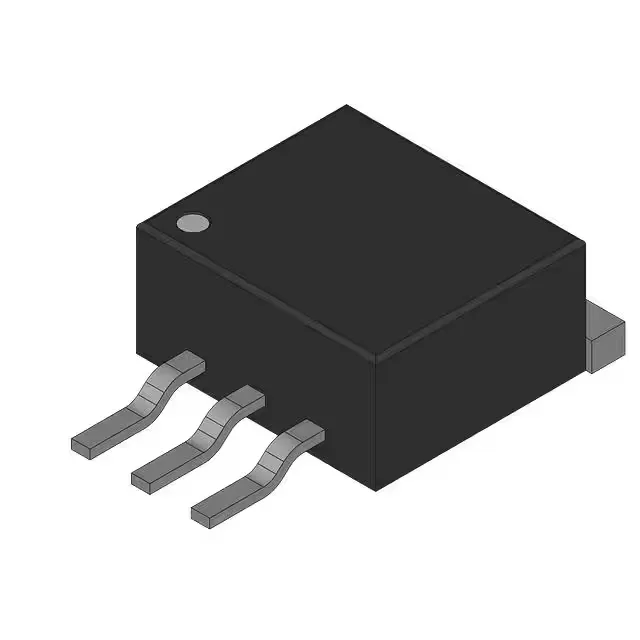
Negative rail LDO for analog and mixed-signal supplies
The Texas Instruments LM2990S-15-TI is a fixed -15 V output LDO regulator rated for 1.8 A continuous output current. It is a negative-output configuration — the pass element sits between the -26 V max input and the -15 V output rail, sourcing current from the negative supply. This makes it a direct fit for generating a clean -15 V rail in op-amp front-ends, ADC/DAC analog supplies, or industrial sensor bias circuits that require a symmetric bipolar pair.
Dropout, quiescent draw, and protection for the bias budget
Maximum dropout voltage is 1 V at 1 A load — the input rail must stay at least 1 V below the -15 V output (i.e., more negative than -16 V) to maintain regulation at full current. At lighter loads the dropout is lower, but the 1 V figure is the worst-case headroom to budget in the supply chain. Quiescent current is 1 mA typical, with a maximum supply current of 5 mA. For a system drawing 1.8 A from the -15 V rail, the LDO's own overhead adds less than 0.3 % to the total current draw — negligible for the bias budget. The quiescent current does not scale significantly with load, so the efficiency penalty is fixed. Built-in over-temperature and short-circuit protection let the regulator survive a sustained output short or a thermal overload without external crowbar circuitry. The thermal shutdown threshold is set above the 125 °C operating limit; the part cycles on and off until the fault clears.
PSRR at 1 kHz — what 52 dB means for a -15 V analog rail
Power-supply rejection ratio is 52 dB at 1 kHz. This means ripple on the input rail is attenuated by a factor of about 400 at that frequency — a 100 mVpp ripple at the input becomes roughly 0.25 mVpp at the output. For a precision op-amp running on -15 V, that level of rejection keeps the supply-induced noise below the amplifier's own input-referred noise floor in most signal-chain designs. PSRR rolls off with frequency; the 52 dB figure at 1 kHz is the mid-band spec. At lower frequencies (100 Hz or below) rejection is typically higher, while above 10 kHz it degrades. If the upstream switching regulator runs at 100 kHz or higher, additional post-filtering ahead of the LDO may be needed to keep the -15 V rail clean.
RoHS status and compliance documentation
The LM2990S-15-TI is RoHS non-compliant. This is a legacy part that uses tin-lead solder finish on the leads — typical for designs that require a leaded process for reliability reasons (e.g., high-reliability or aerospace builds that still run SnPb reflow profiles). Texas Instruments does not provide RoHS-compliant or REACH declarations for this order code; the buyer should verify the termination finish against their own assembly process requirements.