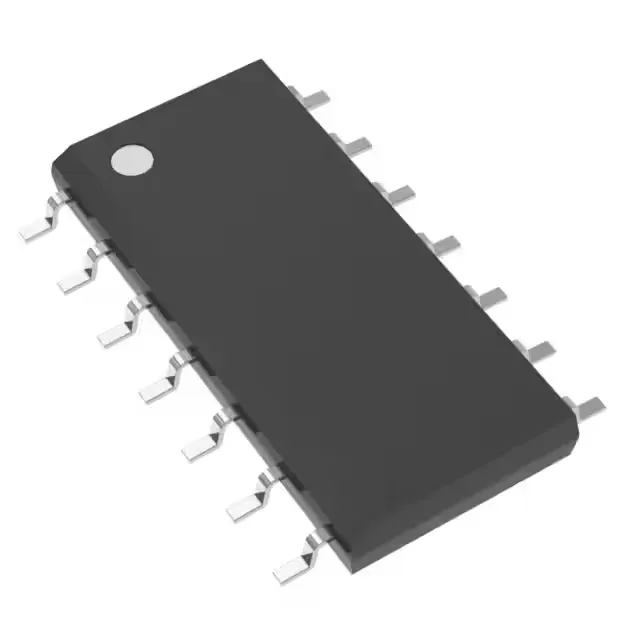
Quad comparator for multi-channel threshold detection
The LM2901AVQDR is a quad differential comparator from Texas Instruments, packing four independent comparator channels into a 14-SOIC surface-mount package. It compares analog input voltages against a reference and drives a logic-level output — the open-collector, CMOS, MOS, or TTL-compatible output type lets it interface directly with a microcontroller GPIO or a PLC digital input without a level translator. Rated for a supply range of 2 V to 32 V single-supply or ±1 V to ±16 V dual-supply, this part covers both single-rail battery-powered designs and split-rail industrial analog front-ends. The 2 mV maximum input offset voltage at 32 V keeps the threshold error tight enough for window comparators and zero-crossing detectors in motor-drive feedback circuits.
Industrial temperature grade and supply flexibility
The 0.25 µA maximum input bias current at 5 V means negligible voltage drop across high-impedance source resistors; a 10 kΩ source sees only 2.5 mV of additional offset, well within the comparator's own 2 mV budget. Quiescent current maxes at 2.5 mA across all four channels — about 0.6 mA per comparator. For a 24 V industrial sensor interface running continuously, the 60 mW dissipation stays within the 14-SOIC's thermal limits without forced airflow.
It remains a current-design-viable part for new BOMs.