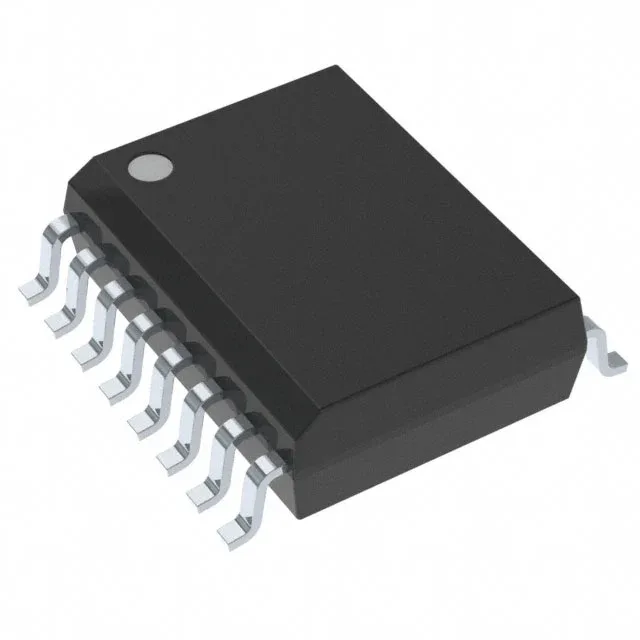
Texas Instruments ISO1642DWR — Digital Isolators

TI ISO1642DWR I²C/SPI Isolator, 5000Vrms, 50Mbps, 16-SOIC

MPNISO1642DWR
End of Life

Texas Instruments ISO1642DWR, ISO164x series, I²C/SPI capacitive-coupling isolator, 4 channels, 50 Mbps data rate, 5000 Vrms isolation, 3V to 5.5V supply, -40°C to 125°C, 16-SOIC package.

$6.16Ref. price · indicative, final on quote
Packaging16-SOIC (0.295", 7.50mm Width)
RoHSNot applicable
SeriesISO164x
Independent supplier — new & surplus stockAuthenticity-screened · ESD-safe packingListing updated Aug 2026

Specifications

ISO1642DWR specifications
ParameterValue
TypeI²C, SPI
SeriesISO164x
Channel typeBidirectional, Unidirectional
MountingSurface Mount
Voltage3V ~ 5.5V
Voltage - isolation5000Vrms
Isolated powerNo
Operating temperature-40°C ~ 125°C
Pulse width distortion45ns
PackageTape & Reel (TR); Cut Tape (CT)
Data rate50Mbps
TechnologyCapacitive Coupling
Case16-SOIC (0.295\", 7.50mm Width)
Channels4
Inputs - side 1/Side 23/3
Rise (Fall time)24ns, 16ns
Propagation delay tpLH (tpHL)70ns, 88ns
Common mode transient immunity50kV/µs

Product details

Timing numbers that matter for bus margin

Propagation delay is 70 ns (low to high) and 88 ns (high to low), with a maximum pulse-width distortion of 45 ns. Rise and fall times are 24 ns and 16 ns typical.

Housed in a 16-pin SOIC wide-body (7.50 mm width), surface-mount. The wide-body gives you the creepage distance needed to maintain the 5000 Vrms rating across the isolation barrier — don't substitute a narrow SOIC footprint.

Frequently asked questions

What is the difference between ISO1642 and ISO1640?

The ISO1642DWR has 4 channels (3 inputs on side 1, 3 on side 2) for bidirectional I²C plus an extra signal. The ISO1640DWR has 2 channels (1 input each side) for a single bidirectional I²C bus. Both share the same 5000 Vrms isolation, 50 Mbps data rate, propagation delay, and 16-SOIC package.

Can ISO1642DWR be used for SPI isolation at 50Mbps?

Yes. The part is rated for both I²C and SPI protocols at 50 Mbps. The 70 ns propagation delay (low to high) and 88 ns (high to low) are within SPI timing margins at that speed, provided the trace lengths are kept short.

Is ISO1642DWR bidirectional?

Yes, the channel type is listed as both bidirectional and unidirectional. The I²C lines (SDA, SCL) are bidirectional; the third channel per side can be configured as unidirectional for signals like interrupts or enables.