Texas Instruments ADS1015IRUGT — Analog & Data Acquisition
Technical Documents PDF / CAD
RoHS Compliant · Lead-Free EIA-481 Standard
Texas Instruments / Analog & Data Acquisition

ADS1015IRUGT 12-bit Sigma-Delta ADC, 3.3 kSPS, I²C

MPN ADS1015IRUGT
Active Spot Stock · 24-48h Dispatch 100% Original Sealed

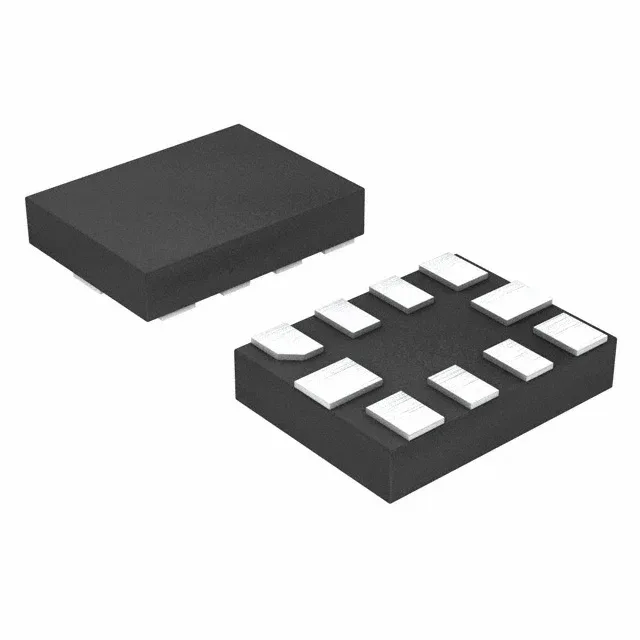
Texas Instruments ADS1015IRUGT 12-bit sigma-delta ADC, 3.3 kSPS, I²C, MUX-PGA-ADC, 2-4 inputs, 10-X2QFN (2x1.5 mm), -40°C to 125°C.

In Stock: 3,295 pcs
MOQ: 1 pcs
Logistics: DHL / FedEx DAP (Global Express · 3-7d) Russia & CIS DDP (Door-to-Door Cleared)
Dispatch: Shenzhen / HK
Unit Price (USD)
$3.53 / pc
Direct Purchase Ready
Volume Pricing Breaks Confirmed upon quotation
1+ pcs
$3.53
10+ pcs
$3.18
30+ pcs
$2.89
100+ pcs
$2.61
500+ pcs
$2.44
1,000+ pcs
$2.29
Working on a production BOM or have a target unit price? Submit Target Price
Buy Now

$3.53 / ea

3,295 in stock — maximum per order · 3–4 days lead time

$3.18 / ea from 10 pcs

Upload Full BOM List
[SPEC] Essential Parameters Snapshot Full Specifications (16)
Package / Case 10-XFQFN
Supply Voltage 2V ~ 5.5V
ALT
Facing long factory lead times or allocation on ADS1015IRUGT? Verified pin-compatible alternatives available with active Shenzhen stock and 100% solder-ready footprint match.

Full Technical Specifications

16 Parameters
ADS1015IRUGT specifications
Parameter / AttributeSpecification / Value
Input typeDifferential, Single Ended
MountingSurface Mount
Reference typeInternal
Voltage - supply, analog2V ~ 5.5V
Voltage - supply, digital2V ~ 5.5V
I/O channels2, 4
Data interfaceI²C
Operating temperature-40°C ~ 125°C
PackageTape & Reel (TR) Cut Tape (CT)
FeaturesPGA, Selectable Address
ArchitectureSigma-Delta
ConfigurationMUX-PGA-ADC
Number of bits12
Case10-XFQFN
Number of a (D converters)1
Sampling rate (Per second)3.3k
100% Footprint Match · Solder-Ready (No PCB Redesign Needed)

Need Stock or a Drop-in Second-Source for ADS1015IRUGT?

Package: MSOP-10 / QFN-10 · Pin-compatible replacements with immediate Shenzhen spot stock

Footprint Match 99%
Supply Chain & Allocation Reality:

The ADS1x1x family is the I2C ADC of the instrument and sensor world: 16-bit for the 111x branch, 12-bit for the 101x branch, one shared pinout and one shared register map, so the same driver code runs both with a data-alignment footnote. The channel and PGA ladder inside each branch does the real selection: x113 without gain, x114 with gain on one channel, x115 with the four single-ended inputs that every voltage-logging project leans on. The buying story is short because the family is honest: the only substitution mistake that costs anything is fitting the 12-bit part where a 16-bit budget was specified - the sockets agree, the numeric result does not.

Verified Pin-Compatible Replacements (3 verified alternatives)

ADS1015 Texas Instruments MSOP-10 / QFN-10
100% Drop-in (Zero Code Change)
Availability & Target Pricing:

The 12-Bit Branch - Faster, Cheaper

Shenzhen Spot Stock (24-48h Dispatch)

Electrical & Core Specs:

Pin-identical and register-identical to the ADS1115 at 12-bit resolution and up to 3300SPS (against 16-bit / 860SPS): the same four single-ended inputs, the same PGA ranges from +/-6.144V down to +/-0.256V.

Same supply and I2C envelope; base address 0x48 set through the ADDR pin.

Compatibility & Drop-In Notes: The honest decision matrix: buy the 1015 when the signal budget is 12-bit and the sample rate matters; buy the 1115 when the resolution matters. Fitting the 1015 into a 16-bit bill of materials is not a failure - it is a quiet loss of resolution that calibration paperwork may reference.
Package & Solder Footprint: Same MSOP-10 / QFN-10 land pattern.
Shenzhen Warehouse Stock & MOQ: Volume stock; the module world carries both.
ADS1114 Texas Instruments MSOP-10
Pin-to-Pin (Minor Clock/Init Tuning)
Availability & Target Pricing:

The Single-Channel Member

Shenzhen Spot Stock (24-48h Dispatch)

Electrical & Core Specs:

The one-input member of the 16-bit branch: a single differential channel with PGA and comparator - the pins beyond AIN0 are not populated.

Same envelope; same 0x48 addressing scheme.

Compatibility & Drop-In Notes: In repair and module work the populated-channel question is the practical one: a code path written to sweep four channels reads nonsense from a single-channel member. Check the marking, then the channel count in software.
Package & Solder Footprint: Shared land pattern - the body does not tell which member it is.
Shenzhen Warehouse Stock & MOQ: Stocked with the family; verify the suffix.
ADS1113 Texas Instruments MSOP-10
Pin-to-Pin (Minor Clock/Init Tuning)
Availability & Target Pricing:

The No-PGA Member

Shenzhen Spot Stock (24-48h Dispatch)

Electrical & Core Specs:

The plainest member: 16-bit, one input, no PGA and no comparator - the resolution without the gain stage.

Same envelope and addressing.

Compatibility & Drop-In Notes: The substitution direction: PGA members can impersonate the 113 within the fixed-gain input range; the reverse cannot create gain. In low-level signal work, order the member with the gain.
Package & Solder Footprint: Shared footprint across the family.
Shenzhen Warehouse Stock & MOQ: Stocked; the cost-down rung for fixed-range logging.
Buyer & Quality Checklist for Sourcing Alternatives
  • Resolution decides the branch, channels decide the member: 16-bit 111x (860SPS) against 12-bit 101x (3300SPS); x113 one input no PGA, x114 one input with PGA, x115 four single-ended with PGA. Same pins and registers throughout - the suffix is the whole specification.
  • The 12-bit branch left-aligns its result in the 16-bit register: driver code must shift or it reads 16x value. Established libraries handle it; hand-rolled SPI/I2C code is where this bites.
  • The PGA input ranges run from +/-6.144V down to +/-0.256V: measuring a 50mV shunt without the gain stage throws away most of the resolution the family exists for. Match the member to the signal amplitude.
  • Inputs must stay inside the supply rails even with gain configured - the absolute-maximums do not negotiate, and sensor wiring that floats above VDD turns a measurement project into a diagnosis project.
  • Addressing is one pin (0x48 base): multiple converters on one bus need the ADDR pin staged per device - the family supports four addresses and no more without a multiplexer.
  • The module boards around this family vary in input protection and reference quality: a genuine 16-bit part on a module with lazy input networks still reads 16-bit values, just not 16 bits of truth.
Frequently Asked Technical Questions

Q: What is the difference between ADS1115 and ADS1015?

A: Resolution and speed: the 1115 is 16-bit at up to 860 samples per second, the 1015 is 12-bit at up to 3300. Same pinout, same register map, same driver with one data-alignment difference - the 12-bit result is left-aligned in the 16-bit register.

Q: Can I swap ADS1115 and ADS1015 boards or code?

A: Hardware yes - same footprint and addressing. Code from the established driver libraries branches automatically; hand-written drivers must respect the alignment and the resolution-dependent scaling.

Q: Which member has the four inputs?

A: The x115 of either branch: four single-ended (or two differential) channels with PGA and comparator. The x114 is one input with gain, and the x113 is one input without - all in the same ten-pin body.

Technical Details & Description

Sigma-delta ADC with integrated PGA and MUX

The ADS1015IRUGT is a 12-bit sigma-delta ADC from Texas Instruments, configured as MUX-PGA-ADC with two differential or four single-ended inputs. The built-in programmable gain amplifier (PGA) lets you scale small sensor signals before conversion, reducing the need for external signal conditioning. Sampling at 3.3 kSPS, this part is sized for low-bandwidth measurement channels — temperature, pressure, strain gauges, or battery monitoring — where the sigma-delta architecture gives good noise rejection at the line-frequency bands. The I²C interface keeps the bus wiring minimal; the selectable address feature lets you put up to four of these on the same two-wire bus.

A single 2V to 5.5V rail powers both the analog and digital sections, which simplifies the power tree — no separate analog and digital supplies needed. Housed in a 10-X2QFN package measuring 2x1.5 mm, the footprint is compact enough for space-constrained sensor modules or handheld instruments. The internal reference eliminates the external reference IC and its associated bypass caps, saving two components per channel.

Listed as active in production with ROHS3 compliance.

ADS1015IRUGT
Verified Allocation
Quote