72 MHz Cortex-M3 with 128 KB Flash — the mid-range workhorse
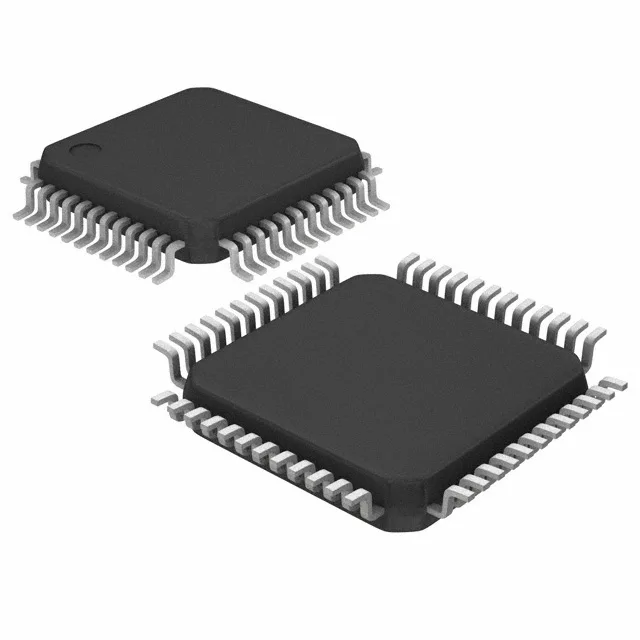
The STM32F103CBT6: It is built for real-time control and connectivity in industrial, automotive aftermarket, and consumer applications where the peripheral set — CAN, USB, multiple UARTs, SPI, I2C, and a motor-control PWM timer — covers the majority of mid-complexity embedded designs without external glue logic. The 72 MHz core delivers 1.25 DMIPS/MHz, enough for sensor fusion loops, fieldbus protocol stacks, and real-time control of brushless DC motors. The 48-LQFP package keeps the board footprint compact — 7 mm × 7 mm with 0.5 mm pitch — while still offering 37 GPIOs for sensor and actuator interfaces.
128 KB Flash and 20 KB SRAM — sizing the firmware budget
The 128 KB Flash (128K × 8) is the mid-density option in the STM32F103 value line, sitting between the 64 KB STM32F103C8T6 and the 256 KB STM32F103RCT6. For a typical application — a CANopen slave node with USB virtual COM port, a few analog inputs, and a PID loop — the firmware footprint lands around 40-60 KB, leaving headroom for field-upgradeable features or a second boot stage. The 20 KB SRAM handles the stack, heap, and DMA buffers; if your application uses double-buffered USB or a large lookup table, budget the RAM allocation before committing the part. The 10-channel 12-bit ADC provides enough analog inputs for a three-phase motor current sense plus a few temperature or pressure transducers without an external multiplexer. The motor-control PWM timer with complementary outputs and dead-time insertion is a genuine differentiator versus general-purpose MCUs in this price tier — it saves an external PWM controller for BLDC or PMSM drives.
The part is ROHS3 compliant. No special handling or lead-free process exceptions apply — standard reflow profiles for 48-LQFP work fine.
This is a current-production, high-volume order code with broad distribution coverage. For a BOM line, the key fit criteria are: 72 MHz core speed sufficient for your control-loop period, 128 KB Flash for your firmware image, 20 KB SRAM for runtime data, and the 48-LQFP footprint matching your board layout. The peripheral set — CAN, USB, motor-control PWM, and 10-channel ADC — covers a wide range of industrial and automotive-adjacent applications without external components. If your design needs lower power for battery operation, the STM32L1 series (e.g., STM32L151CBU6A) is a Cortex-M3 alternative with a 32 MHz ceiling but significantly lower active and sleep currents.