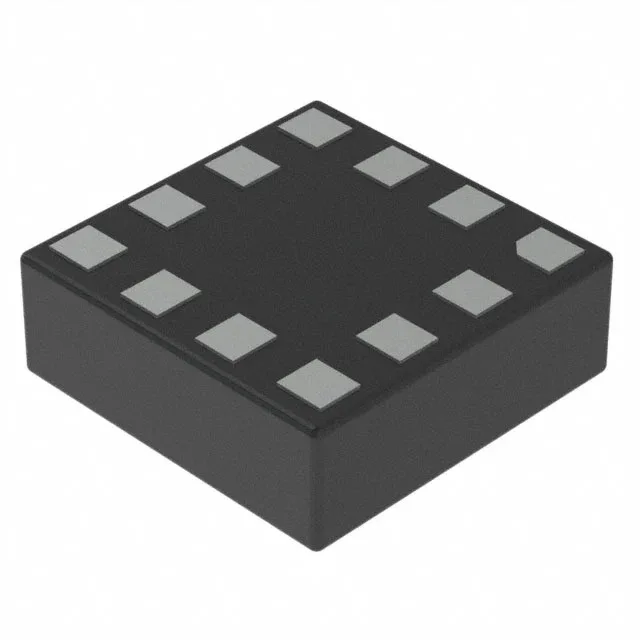
STMicroelectronics LIS3MDLTR — Sensors & Transducers

LIS3MDLTR STMicroelectronics 3-Axis Magnetoresistive Sensor

MPNLIS3MDLTR
Active

STMicroelectronics LIS3MDLTR, 3-axis magnetoresistive sensor, 16-bit resolution, selectable full-scale ±0.4mT to ±1.6mT, I²C/SPI digital output, 1.9V to 3.6V supply, -40°C to 85°C, 12-LGA (2x2 mm) package.

$6.01147Ref. price · indicative, final on quote
Packaging12-VFLGA
RoHSROHS3 Compliant
Independent supplier — new & surplus stockAuthenticity-screened · ESD-safe packingListing updated Aug 2026

Specifications

LIS3MDLTR specifications
ParameterValue
Output typeI²C, SPI
MountingSurface Mount
Voltage1.9V ~ 3.6V
Current - supply270µA (Typ)
Operating temperature-40°C ~ 85°C (TA)
AxisX, Y, Z
PackageTape & Reel (TR) Cut Tape (CT)
FeaturesSelectable Scale
Resolution16 b
TechnologyMagnetoresistive
Sensing distance±0.4mT, ±0.8mT, ±1.2mT, ±1.6mT
Case12-VFLGA

Product details

The LIS3MDLTR is a three-axis magnetoresistive sensor that measures magnetic field strength along X, Y, and Z axes with 16-bit resolution. It outputs data over either I²C or SPI, so it can connect directly to the same bus as an accelerometer or gyroscope without an extra ADC channel. The sensing range is selectable between ±0.4 mT, ±0.8 mT, ±1.2 mT, and ±1.6 mT. Choosing the ±0.4 mT range gives the finest resolution for weak-field measurements like the Earth's magnetic compass heading; the ±1.6 mT range handles stronger nearby magnets without saturating the sensor. Supply voltage spans 1.9 V to 3.6 V. Typical supply current is 270 µA.

Package and footprint considerations for layout

The LIS3MDLTR comes in a 12-VFLGA package with a 2x2 mm body (supplier device package 12-LGA). The LGA land pattern requires a solder-mask-defined pad on the PCB; the exposed centre pad should be connected to the ground plane for thermal and mechanical stability.

ROHS3 compliance is confirmed, which simplifies EU and global regulatory acceptance.

Frequently asked questions

Can LIS3MDLTR be used with an SPI interface?

Yes, the sensor supports both I²C and SPI digital output. The SPI interface allows higher data rates and a dedicated chip-select line, which is useful when multiple sensors share the same bus.