Triac output without zero-crossing — what it means for the load
The MOC3020SR2M is a 1-channel optoisolator with a triac output and no zero-crossing circuit. This means the triac fires immediately when the LED current exceeds the 30 mA trigger threshold, regardless of the AC line voltage phase. For driving resistive loads like heaters or incandescent lamps, the lack of zero-crossing produces a turn-on transient that can generate EMI; for phase-angle control circuits (dimmer or soft-start), it is exactly what you want. Rated for 400 V off-state blocking voltage and 4170 Vrms isolation between input and output, it suits line-voltage AC switching in industrial controls, appliance boards, and solid-state relay front-ends. The 100 µA typical hold current means the triac stays latched until the load current drops below that level near the AC zero-crossing — standard behavior for a random-phase triac driver.
Package and board-fit for the 6-SMD gull wing
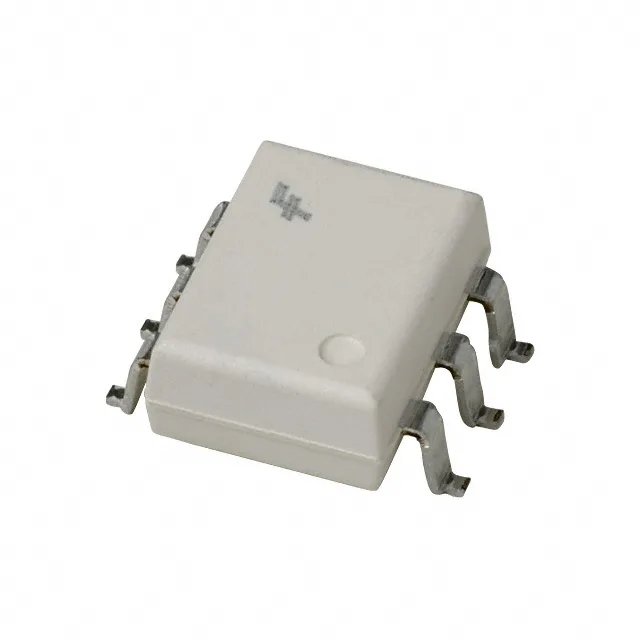
Housed in a 6-SMD gull wing package, the MOC3020SR2M is a surface-mount part intended for reflow assembly. The supplier device package is listed as 6-SMD; the footprint matches standard SOP-6 land patterns used for optocouplers. Tape & Reel packaging supports automated pick-and-place at volume. The forward voltage is 1.15 V typical, and the maximum DC forward current is 60 mA — the LED drive circuit should be current-limited to stay within that ceiling.