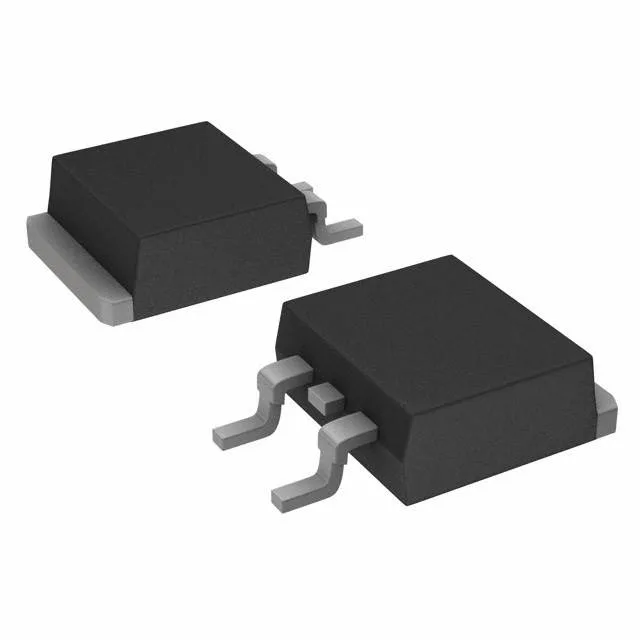
The 44mΩ maximum on-resistance at 18A with a 10V gate drive is the headline number for conduction loss budgeting — at lower gate voltages the Rds(on) climbs, so the 4V drive voltage spec is worth checking if your gate drive rail is 3.3V. The logic-level threshold (2V max at 250µA) means a 5V logic output can turn it on hard enough for moderate loads, but for the full 36A rating you want the full 10V drive to keep the channel resistance at its minimum. Gate charge is 74nC at 5V, so a gate driver with 1A peak current will switch it in the tens of nanoseconds; the 1800pF input capacitance at 25V drain-source is moderate for a 100V device.
Where it fits — switching and load-switch roles
The 100V rating and 36A continuous current suit this part for 48V bus converters, battery-management disconnect switches, motor-drive half-bridges up to a few hundred watts, and DC-DC stages where the input rail is 24V to 72V. The logic-level gate threshold also makes it usable as a high-side load switch driven directly from a 5V microcontroller GPIO, as long as the load current stays within the Rds(on) at that gate voltage.