72 Mbit NoBL synchronous SRAM at 167 MHz — what it buys you
It clocks at 167 MHz with a 3.4 ns access time, meaning back-to-back reads can happen every cycle without dead cycles on the bus. That matters for high-throughput applications like network packet buffers, DSP cache, or telecom line cards where the processor cannot afford wait states. The 2.5 V supply (2.375 V to 2.625 V) cuts dynamic power versus older 3.3 V synchronous SRAMs, but it does require a dedicated 2.5 V rail on the board — you cannot drop this into a 3.3 V memory bus without a regulator.
Package and board integration — 165-ball BGA
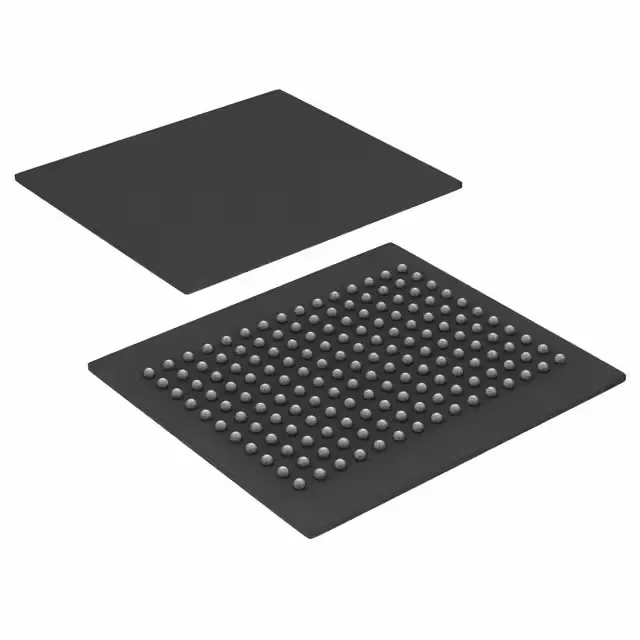
The 165-LBGA (15x17 mm body, 165-FBGA supplier package) is a fine-pitch BGA that needs a multi-layer PCB with via-in-pad or dogbone fanout. Surface-mount only. The BGA footprint does not lend itself to hand-soldering; rework requires a preheat station and X-ray inspection to verify ball wetting.
Lifecycle and supply — active, no LTB on the horizon
The base product number is CY7C1470; the BV25 suffix denotes the 2.5 V supply variant, and 167BZXI encodes the 167 MHz speed grade, industrial temperature, and 165-ball BGA package. When ordering, confirm the full suffix matches your BOM line — a 133 MHz or 3.3 V variant will not drop in without timing or supply changes.