Clock synthesis core for high-speed converter and SERDES reference paths
The AD9525BCPZ-REEL7 is a clock generator IC from Analog Devices that integrates a PLL with bypass capability, allowing it to operate either as a frequency synthesizer or as a clean distribution path for an external reference clock. Its maximum output frequency of 3.6 GHz makes it suitable for clocking high-speed ADCs, DACs, and SERDES transceivers that require a low-jitter sample clock above 3 GHz. The device accepts two clock inputs and distributes up to nine outputs, with a mix of CMOS and LVPECL signal formats — the LVPECL lanes handle differential routing for the highest-frequency paths, while CMOS outputs serve lower-speed logic or FPGA reference clocks.
Supply rails, temperature grade, and package options for production planning
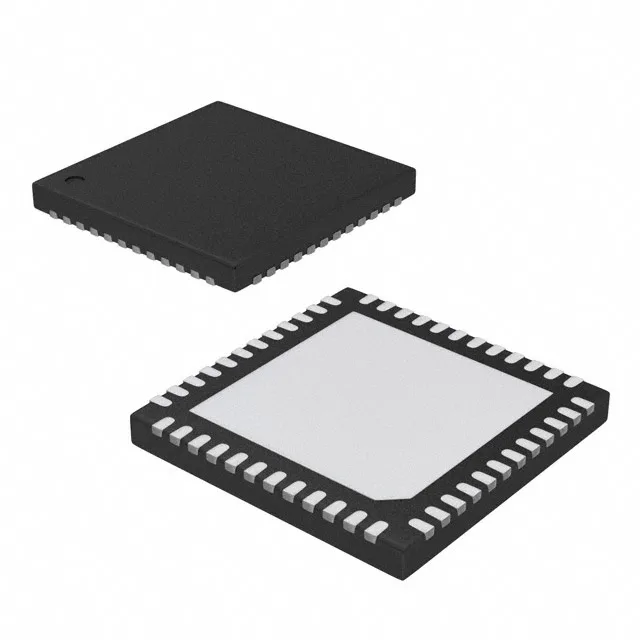
Housed in a 48-lead LFCSP (7x7 mm) with exposed pad for thermal management, the REEL7 suffix indicates tape-and-reel packaging — the standard format for automated pick-and-place assembly. Cut-tape quantities are also available for prototyping or low-volume builds.
How the AD9525 compares to the AD9516-1BCPZ-REEL7 for output count vs frequency ceiling
The closest peer in the Analog Devices clock portfolio is the AD9516-1BCPZ-REEL7, which offers 14 outputs versus the AD9525's 9, but tops out at 2.95 GHz versus 3.6 GHz. If your clock tree needs more than nine distribution lanes and the highest output frequency stays below 3 GHz, the AD9516-1 is the higher-output-count choice. If you need a sample clock above 3 GHz — for example, clocking a 3.2 GSPS ADC — the AD9525's 3.6 GHz ceiling is the deciding factor. Both parts share the same 48-LFCSP footprint and 3.135 V to 3.465 V supply range, so a board layout designed for one can often accommodate the other with a BOM change and firmware update to the PLL register map.