That's tight enough for most 5 V logic and analog bias rails, but if the design needs 1% regulation, you step up to the TL431A or TL431B grades.
The output voltage is adjustable from 2.495 V up to 36 V via two external resistors — that covers everything from a 3.3 V reference for an ADC to a 24 V clamp in an industrial PSU. The 100 mA output current is the maximum the shunt can sink; the cathode current must stay above 1 mA for the reference to regulate properly. If the load pulls less than 1 mA through the cathode, the output drifts — so the design always needs a bias resistor sized to guarantee that minimum current even at no load. The 36 V max output means this part handles 24 V industrial rails with headroom, but not 48 V telecom buses.
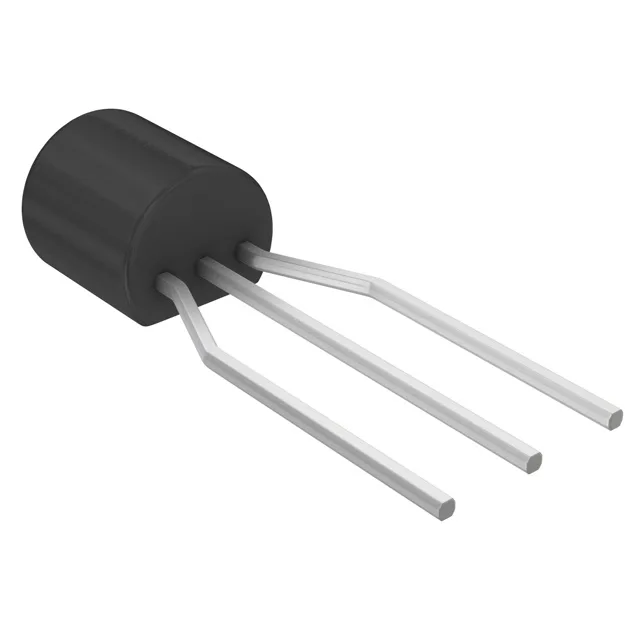
Through-hole TO-92-3 — still the right call for some boards
The TO-92-3 package with formed leads (TO-226AA variant) is a through-hole part — it's the one you solder into a board with a wave or hand iron, not reflow. That's a deliberate choice for PSUs, battery chargers, and industrial control boards where the reference sits near a hot transformer or heatsink and the board goes through wave solder anyway. The formed leads give a consistent stand-off height off the PCB. If the BOM calls for an SMT reference, the TL431 family has SOIC-8 and SOT-23 options; this variant is for the through-hole line.
For the typical industrial PSU or control board, this temperature envelope is exactly what the design requires.
That means it's still a standard catalog part, not a shortage-driven broker special.