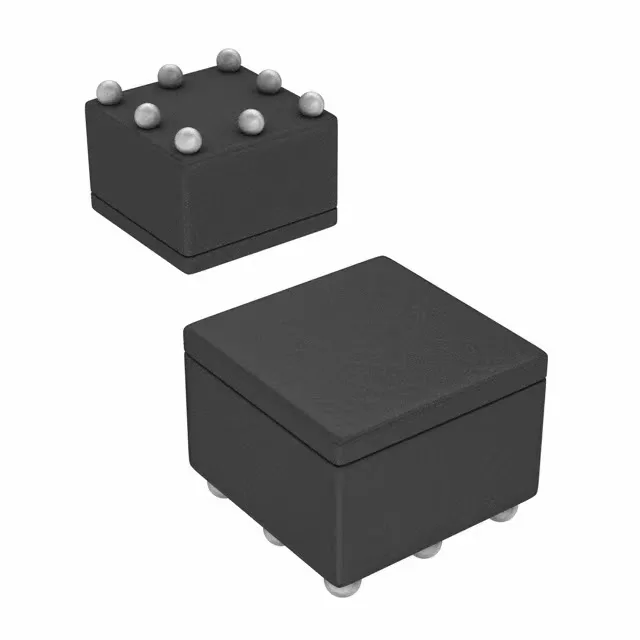
The LM358BPX is a dual general-purpose op-amp from Texas Instruments, built on the classic LM358 architecture but packaged in a tiny 8-VFBGA (8-uSMD) footprint. With a 1.2 MHz gain-bandwidth product and 0.5 V/µs slew rate, it is sized for DC-accurate amplification and low-frequency signal conditioning — think sensor buffers, current shunts, and active filters below 100 kHz — not video or RF paths. Each of the two channels draws 300 µA typical supply current, making the pair a 600 µA quiescent load on the rail. That matters when the op-amp sits on a 24 V industrial bus powered through a linear regulator — the quiescent draw is small enough to ignore in the thermal budget.
3 V to 30 V supply — one rail covers most industrial sensors
The supply span runs from 3 V minimum to 30 V maximum, so the same part can run off a 3.3 V logic rail, a 5 V precision reference, or a 24 V industrial supply without a secondary regulator. Input bias current is 10 nA typical and input offset voltage is 1 mV typical — adequate for 8-bit to 10-bit accuracy loops where the signal is above 10 mV full-scale.
The 8-VFBGA package (supplier device package 8-uSMD) is a 0.5 mm pitch BGA with no leads — the solder balls are under the body. That means the PCB must have microvias or via-in-pad for fan-out, and rework requires a hot-air station with a fine nozzle and a preheat plate. If your assembly line is set up for 0.5 mm pitch BGAs, this part fits; if you only handle SOIC-8 or DIP-8, the LM358BPX will be a rework headache. No tube or tray option is listed, so hand-assembly or low-volume prototyping means ordering a reel and dealing with the carrier tape.