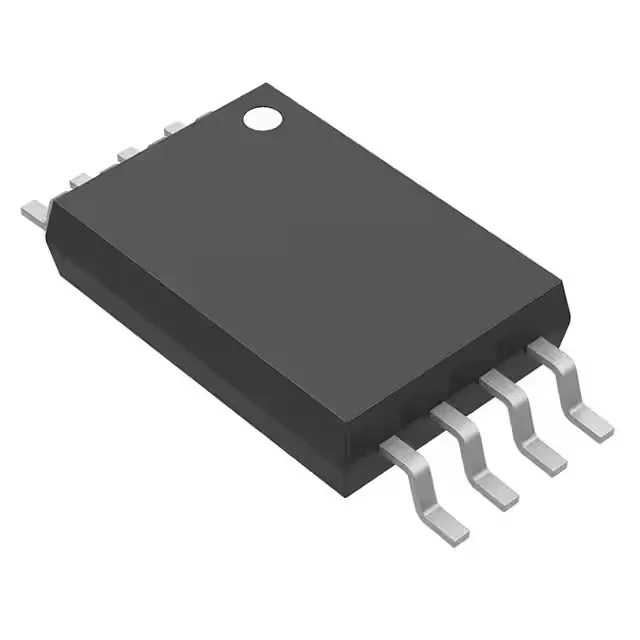
What a dual differential comparator brings to an automotive board
The LM2903EPWRQ1 is a dual differential comparator from Texas Instruments, qualified to AEC-Q100 for automotive use. Two independent comparators in one 8-TSSOP package let you monitor two threshold crossings — over-voltage and under-voltage on a supply rail, or a sensor window — without doubling the footprint. The supply range spans 2 V to 30 V single or dual, so it runs off a 3.3 V logic rail, a 5 V sensor supply, or a 12 V battery line without an extra regulator.
Output flexibility and input precision
The output stage supports CMOS, MOS, open-collector, and TTL logic families — you can wire-OR open-collector outputs for a shared interrupt line, or drive a CMOS gate input directly. Typical output current is 20 mA, enough to switch a small relay or LED indicator without a buffer transistor. Input offset voltage is 7 mV max at 5 V, setting the threshold accuracy floor; for a 100 mV reference, the trip point uncertainty is about 7 %. Quiescent current draws 1 mA max per device, so the dual comparator adds roughly 2 mA to the module budget — acceptable for always-on automotive body controllers that must stay under 100 mA total sleep current.