Texas Instruments 5962-0051202QPA — Logic ICs

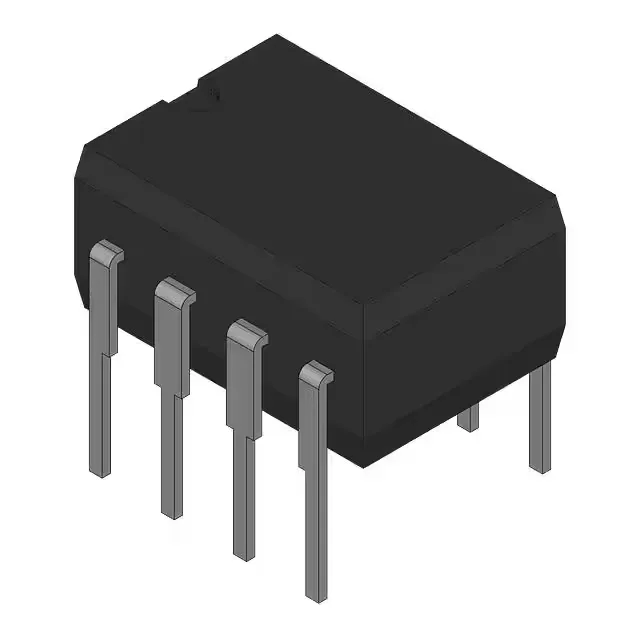
5962-0051202QPA Quad Op-Amp, 6.4 MHz, AEC-Q100, CDIP

MPN5962-0051202QPA
End of Life

Quad general-purpose op-amp, 6.4 MHz gain bandwidth, 1.6 V/µs slew rate, rail-to-rail output, 2.7 V to 6 V supply, 550 µA per channel, -55°C to 125°C, 8-CDIP (0.300", 7.62 mm), AEC-Q100 qualified.

$21.03Ref. price · indicative, final on quote
Packaging8-CDIP (0.300", 7.62mm)
StockContact for availability
MOQ1 pcs
  • 100% new & originalTraceable channels only — no refurbs, no pulls, no remarked parts.
  • Date & lot codes on quoteStated per line before you commit; label photos on request.
  • MSL-compliant ESD packingMoisture-sealed bags with indicator cards; reels photo-verified.
  • PayPal buyer protectionPay by T/T, PayPal or Payoneer — card payments covered end to end.

Specifications

5962-0051202QPA Technical Specifications
ParameterValue
SeriesAutomotive, AEC-Q100
Output typeRail-to-Rail
Mounting typeThrough Hole
Amplifier typeGeneral Purpose
Voltage - input offset500 µV
Voltage - supply span2.7 V
Current - supply550µA (x4 Channels)
Current - input bias1.3 nA
Current - output (Channel)80 mA
Operating temperature-55°C ~ 125°C (TA)
Gain bandwidth product6.4 MHz
PackageBulk
Slew rate1.6V/µs
Case8-CDIP (0.300\", 7.62mm)
Number of circuits4

Product details

Quad op-amp in a hermetic CDIP — why this package matters

The 5962-0051202QPA is a quad general-purpose operational amplifier from the Automotive, AEC-Q100 series, housed in an 8-CDIP ceramic dual-in-line package. Each channel draws 550 µA supply current, making it suitable for multi-channel signal conditioning in power-constrained, high-reliability systems.

6.4 MHz GBW and 1.6 V/µs slew rate — bandwidth budget

The 6.4 MHz gain-bandwidth product supports unity-gain stable operation for audio-frequency filters, sensor amplifiers, and control-loop compensation. The 1.6 V/µs slew rate limits large-signal bandwidth to roughly 100 kHz at 10 V p-p output, which is adequate for most industrial sensor interfaces and actuator drives. For higher-speed applications above 500 kHz, a faster op-amp like the TLV9362IDDFR (10.6 MHz, 25 V/µs) would be a better fit, but the 5962-0051202QPA's hermetic package and temperature range are not available in that family.

AEC-Q100 and military temperature range

The AEC-Q100 qualification (Automotive, AEC-Q100 series) means this part has passed the stress tests required for automotive-grade ICs: extended temperature cycling, high-temperature operating life, and ESD robustness. The 8-CDIP package is hermetically sealed, preventing moisture ingress and corrosion in high-humidity or condensing environments.

Quad-channel, 550 µA per amplifier — power budget

Four amplifiers in a single 8-pin package at 550 µA each (2.2 mA total) keeps the analog power budget lean for multi-channel data acquisition or control systems. The 1.3 nA input bias current and 500 µV input offset voltage are typical for a general-purpose bipolar op-amp; for precision applications below 100 µV offset, a zero-drift amplifier would be required.

RoHS non-compliant — a sourcing consideration

The 5962-0051202QPA is listed as RoHS non-compliant, which is expected for a hermetic ceramic package that uses lead-based solder seals and lead-frame finishes. This part is exempt from RoHS restrictions for high-reliability applications (military, aerospace) under current EU exemptions. For designs that require RoHS compliance, a surface-mount plastic-packaged quad op-amp such as the OPA4374AIPWT (6.5 MHz, 5 V/µs, CMOS, RoHS) could be considered, but it lacks the hermetic seal and military temperature range.

Frequently asked questions

Is 5962-0051202QPA RoHS compliant?

No, it is listed as RoHS non-compliant, which is standard for hermetic ceramic CDIP packages that use lead-based seals.

What is the equivalent or replacement for 5962-0051202QPA?

No direct pin-compatible replacement is listed. For single- or dual-channel alternatives, the TLV9351IDCKR (3.5 MHz) and TLV9362IDDFR (10.6 MHz) are options, but a board redesign is needed.