AEC-Q100 grade and temperature envelope
The LM2901AVQPWRQ1: That means it meets the AEC-Q100 stress test qualification for Grade 1 devices, covering the under-hood and engine-bay ambient where 105°C is routine and the 125°C absolute maximum allows margin for thermal transients.
Supply flexibility and output architecture
Operates from a single supply of 2V to 36V or a dual supply of ±1V to ±18V. This wide range lets the comparator run directly from an unregulated automotive battery rail (12V nominal, 9V-16V transient) without a local regulator, or from a ±15V industrial supply. The output stage supports CMOS, MOS, open-collector, and TTL logic levels, so it can drive a microcontroller GPIO, a PLC digital input, or a power MOSFET gate driver without a level translator.
Offset, bias, and quiescent current — the signal-chain limits
Maximum input offset voltage is 2mV at 5V supply — the threshold accuracy for a window comparator or zero-crossing detector. Quiescent current per comparator is 2.5mA max, so the full quad draws under 10mA from the supply rail even at 125°C.
Quad comparator in 14-TSSOP — board-fit reality
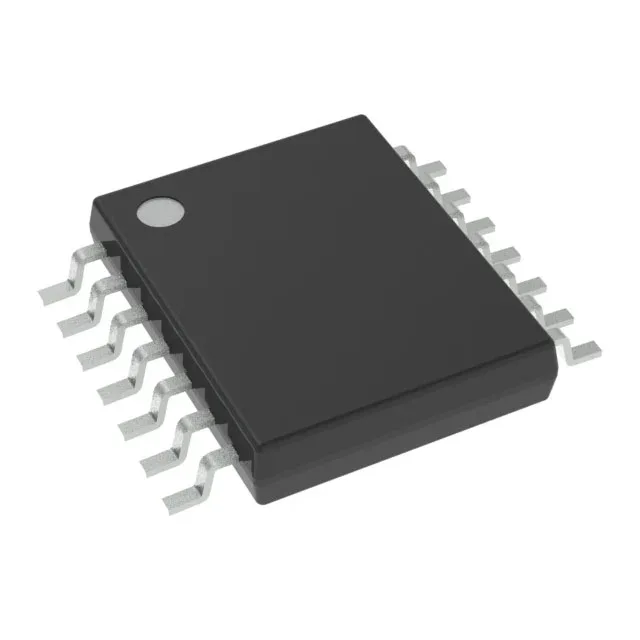
Four comparators in a 14-TSSOP package (4.40mm body width, 0.65mm pin pitch) — a common footprint shared with other TI quad comparators like the LM339 and LM2901 family. The 20mA typical output current per channel is enough to drive an LED indicator or a small relay coil through a base resistor; for higher loads, the open-collector output can sink current from an external pull-up to a higher voltage rail.