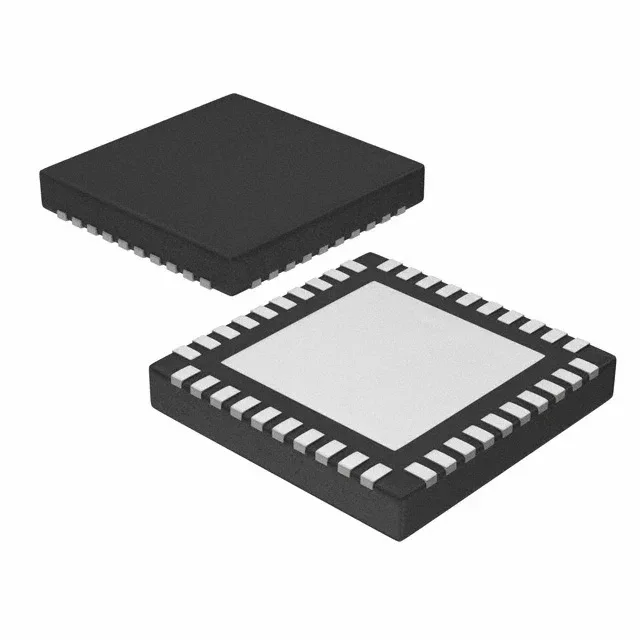
Texas Instruments CC2540F128RHAT — RF & Wireless ICs

TI CC2540F128RHAT Bluetooth 4.0 SoC, 128kB Flash, 21 GPIO

MPNCC2540F128RHAT
Active

Texas Instruments CC2540F128RHAT, Bluetooth v4.0 TxRx + MCU, 2.4GHz, GFSK, 128kB Flash, 8kB SRAM, 21 GPIO, -93dBm sensitivity, 4dBm output, 1Mbps data rate, 2V-3.6V supply, -40°C~85°C, 40-VQFN (6x6).

$4.2826Ref. price · indicative, final on quote
Independent supplier — new & surplus stockAuthenticity-screened · ESD-safe packingListing updated Aug 2026

Specifications

CC2540F128RHAT specifications
ParameterValue
TypeTxRx + MCU
MountingSurface Mount
RF familyBluetooth
Voltage2V ~ 3.6V
Current - receiving19.6mA ~ 22.1mA
Current - transmitting21.1mA ~ 31.6mA
Power - output4dBm
Frequency2.4GHz
ProtocolBluetooth v4.0
InterfaceSPI, USART, USB
Operating temperature-40°C ~ 85°C
GPIO21
PackageTape & Reel (TR) Cut Tape (CT)
ModulationGFSK
Memory size128kB Flash, 8kB SRAM
Sensitivity-93dBm
Case40-VFQFN Exposed Pad
Data rate1Mbps

Product details

Active Bluetooth 4.0 SoC with integrated MCU

The Texas Instruments CC2540F128RHAT is a single-chip Bluetooth 4.0 solution combining a 2.4 GHz transceiver with an integrated 8051-compatible MCU core. The radio delivers a -93 dBm receiver sensitivity and a +4 dBm maximum output power, supporting a 1 Mbps data rate over the Bluetooth v4.0 protocol.

Memory and I/O budget for BLE firmware

The 128 kB Flash must host both the BLE protocol stack and the application firmware. With a typical BLE 4.0 stack occupying 30–40 kB, roughly 90 kB remains for application code. The 8 kB SRAM handles stack data buffers and application variables; designs with large data arrays or multiple simultaneous connections should budget carefully. The 21 GPIO lines include serial interface pins shared with SPI, USART, and USB peripherals. When using USB, the D+ and D- pins consume two GPIOs, leaving 19 for general-purpose use. The SPI and USART interfaces share additional pins, so the actual free GPIO count depends on the peripheral configuration chosen.

The QFN is reworkable with hot air if the pad is properly tinned and the board has a solder mask defined pad; orientation is marked by a pin 1 chamfer on the package corner.

Frequently asked questions

Is CC2540F128RHAT compatible with Bluetooth 5?

No. The CC2540F128RHAT is a Bluetooth v4.0 device. It does not support the Bluetooth 5 PHY layer, longer range, or higher data rate modes without a hardware change. The CC2640 or CC2650 series are the recommended Bluetooth 5-capable alternatives from the same vendor.

What are the differences between CC2540F128RHAT and CC2541?

Both are pin-compatible Bluetooth 4.0 SoCs in the same package. The CC2541 offers a lower current consumption profile (approximately 20% less in receive mode) and supports the Bluetooth 4.1 specification. The CC2540F128RHAT has a slightly higher transmit current but identical 128 kB Flash and 8 kB SRAM. Firmware must be recompiled for the CC2541 due to stack differences.

Can CC2540F128RHAT be used in Bluetooth 5 applications?

No. The radio hardware is limited to Bluetooth v4.0's 1 Mbps GFSK modulation. Bluetooth 5's 2 Mbps, long-range coded PHY, and advertising extensions are not supported. For Bluetooth 5 designs, consider the CC2640R2F or CC2652R series.