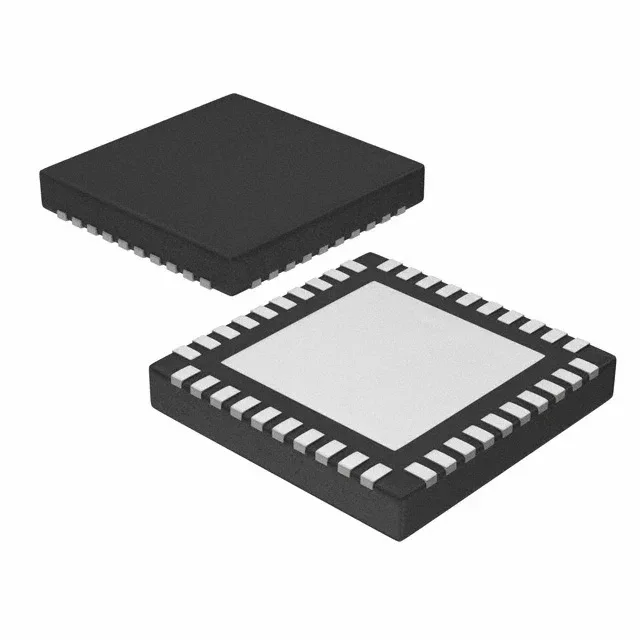
Single-chip Zigbee node with an MCU onboard
The Texas Instruments CC2530F32RHAR is a true single-chip solution for Zigbee wireless networks — it integrates a 2.4 GHz IEEE 802.15.4 transceiver and an 8051-based MCU core in one 40-VFQFN package. The radio delivers a receive sensitivity of -97 dBm and a programmable output power up to 4.5 dBm, giving a link budget that works reliably through walls and across typical home or industrial floorplans. The 21 GPIO pins connect directly to switches, LEDs, relays, or external sensors, and the SPI and USART serial interfaces link to external ADCs, displays, or memory.
Current consumption sits at 20.5 mA to 24.3 mA while receiving and 28.7 mA to 33.5 mA while transmitting at 4.5 dBm. That is low enough for battery-powered nodes running on two AA cells or a CR2032, especially with the sleep modes the 8051 core supports.
What the -97 dBm sensitivity means on site
In a real deployment — say a 50-unit mesh network across a warehouse — the -97 dBm receiver sensitivity is the number that determines whether the farthest node can close the link. Combined with the 4.5 dBm output, the CC2530F32RHAR holds a link budget around 101.5 dB. That is enough to punch through two concrete walls at 30 meters with margin. If the environment is noisier or the range longer, the CC2530F256RHAT with the same radio but 256 kB Flash is the same footprint and pinout — just more memory for a retransmission buffer or a more aggressive mesh routing table.