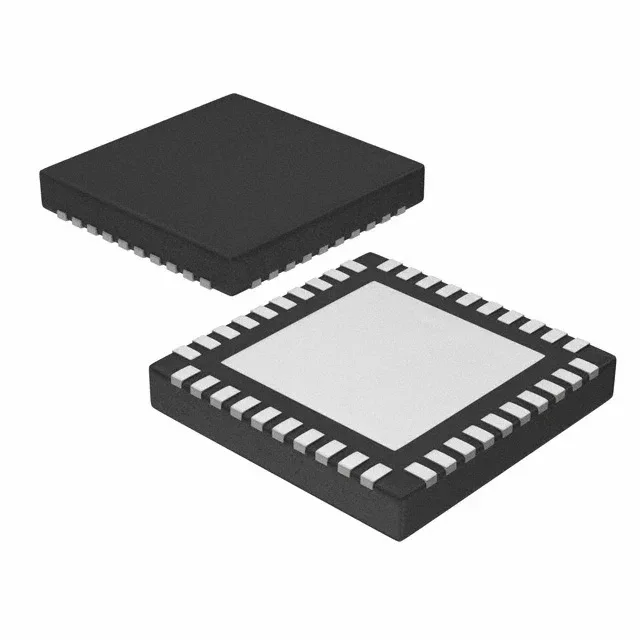
Texas Instruments CC2530F64RHAR — RF & Wireless ICs

CC2530F64RHAR Texas Instruments Zigbee SoC, 64kB Flash

MPNCC2530F64RHAR
Active

Texas Instruments CC2530F64RHAR, Zigbee 2.4GHz TxRx + MCU, 64kB Flash, 8kB RAM, 250kbps, -97dBm sensitivity, 21 GPIO, 40-VQFN (6x6), -40°C to 125°C.

$3.7350Ref. price · indicative, final on quote
Independent supplier — new & surplus stockAuthenticity-screened · ESD-safe packingListing updated Aug 2026

Specifications

CC2530F64RHAR specifications
ParameterValue
TypeTxRx + MCU
MountingSurface Mount
RF family802.15.4
Voltage2V ~ 3.6V
Current - receiving20.5mA ~ 24.3mA
Current - transmitting28.7mA ~ 33.5mA
Power - output4.5dBm
Frequency2.4GHz
ProtocolZigbee®
InterfaceSPI, USART
Operating temperature-40°C~125°C
GPIO21
PackageTape & Reel (TR)
Memory size64kB Flash, 8kB RAM
Sensitivity-97dBm
Case40-VFQFN Exposed Pad
Data rate250kbps

Product details

Zigbee SoC with 64 kB Flash — stack fit and memory headroom

That memory footprint is sized for the full Zigbee PRO stack plus an application image — enough for a sensor endpoint or a router node, but tight if you plan over-the-air firmware updates alongside a large application. The 8 kB RAM handles the stack's frame buffers and a modest data payload; designs needing larger application state or multiple concurrent connections should budget headroom carefully.

Radio link budget: -97 dBm sensitivity and 4.5 dBm output

Receiver sensitivity of -97 dBm gives this part a solid link budget for indoor building automation and industrial sensor networks. With a 4.5 dBm transmit output and a quarter-wave monopole, expect line-of-sight ranges around 100–300 m in open air; walls and concrete floors reduce that by 50–70%. The 250 kbps data rate is the Zigbee standard maximum — adequate for periodic sensor reports and command/response traffic, not for streaming or high-throughput applications.

21 GPIOs and serial interfaces in a 40-pin QFN

The 40-VFQFN exposed-pad package (6x6 mm) brings out 21 GPIOs plus SPI and USART serial interfaces. That I/O count covers a typical sensor node: a few digital inputs, an SPI flash for logging, a UART to a host processor, and a couple of LED/switch lines.

Current draw sits at 20.5 mA to 24.3 mA in receive and 28.7 mA to 33.5 mA in transmit — battery-life calculations should use the higher end of those ranges for worst-case budgeting.

The base product number CC2530F64 covers the 64 kB Flash variant — the 256 kB sibling (CC2530F256) is pin-compatible if the application later needs more program memory.

Frequently asked questions

What is the difference between CC2530F64RHAR and CC2530F256RHAT?

The two parts are pin-compatible and share the same radio, package, and temperature range. The 256 kB variant supports larger application images and OTA upgrade staging; the 64 kB part is sufficient for a fixed-function Zigbee endpoint with a compact stack.

What is the maximum data rate of CC2530F64RHAR?

The maximum data rate is 250 kbps, which is the standard over-the-air rate for IEEE 802.15.4 and Zigbee at 2.4 GHz.

Can CC2530F64RHAR be used as a Zigbee coordinator?

Yes — the CC2530F64RHAR can operate as a Zigbee coordinator, router, or end device.

Is CC2530F64RHAR compatible with Zigbee 3.0?

The CC2530 is a Zigbee 2007 / Zigbee PRO era device. Running Zigbee 3.0 on it requires the Z-Stack 3.0.x firmware from TI, which fits within the 64 kB Flash with careful application sizing. The radio hardware supports the PHY and MAC layers required by Zigbee 3.0.