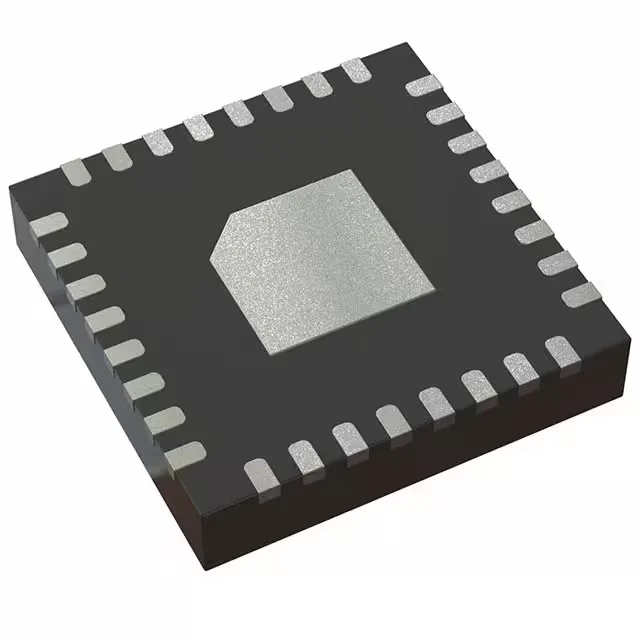
Texas Instruments CC1101TRHBRG4Q1 — RF & Wireless ICs

CC1101TRHBRG4Q1 Sub-1 GHz Transceiver, 310-928 MHz, -114 dBm

MPNCC1101TRHBRG4Q1
End of Life

Texas Instruments CC1101TRHBRG4Q1, TxRx Only, General ISM < 1GHz, 310MHz ~ 348MHz, 420MHz ~ 450MHz, 779MHz ~ 928MHz, 2FSK, GFSK, ASK, MSK, OOK, 250kBaud, -114dBm sensitivity, +11dBm output, 1.8V ~ 3.6V supply, SPI, -40°C ~ 105°C, 32-VFQFN Exposed Pad.

$1.0000Ref. price · indicative, final on quote
Independent supplier — new & surplus stockAuthenticity-screened · ESD-safe packingListing updated Aug 2026

Specifications

CC1101TRHBRG4Q1 specifications
ParameterValue
TypeTxRx Only
MountingSurface Mount
RF familyGeneral ISM < 1GHz
Voltage1.8V ~ 3.6V
Current - receiving15.5mA ~ 19.3mA
Current - transmitting12.1mA ~ 35.5mA
Power - output11dBm
Frequency310MHz ~ 348MHz, 420MHz ~ 450MHz, 779MHz ~ 928MHz
InterfaceSPI
Operating temperature-40°C~105°C
PackageTape & Reel (TR); Cut Tape (CT)
Modulation2FSK, GFSK, ASK, MSK, OOK
Sensitivity-114dBm
Case32-VFQFN Exposed Pad
Data rate250kBaud

Product details

Multi-band sub-1 GHz transceiver for ISM links

The Texas Instruments CC1101TRHBRG4Q1 is a single-chip TxRx-only transceiver covering three sub-1 GHz ISM bands: 310–348 MHz, 420–450 MHz, and 779–928 MHz. It supports 2FSK, GFSK, ASK, MSK, and OOK modulation at data rates up to 250 kBaud, with a receiver sensitivity of -114 dBm and a maximum output power of +11 dBm.

Sensitivity and output power — link budget anchor

The -114 dBm sensitivity combined with +11 dBm output power gives a typical link budget around 125 dB before antenna gains. That translates to reliable outdoor links in the 868/915 MHz bands at several hundred metres line-of-sight with a quarter-wave whip. The current draw in receive mode runs 15.5 mA to 19.3 mA; transmit current ranges from 12.1 mA at low power up to 35.5 mA at +11 dBm, so battery sizing needs to account for the duty cycle and output level.

The base product number CC1101 spans multiple package and temperature variants, providing a stable supply baseline for the foreseeable future.

Housed in a 32-VFQFN with exposed pad (5x5 mm body), the device requires a solid ground-plane via stitch under the thermal pad to keep junction temperatures in check during continuous transmit at +11 dBm. The SPI interface is the only control bus, so a host MCU with at least four free GPIOs (CSn, SCLK, MOSI, MISO) is needed.

Frequently asked questions

What frequencies does CC1101TRHBRG4Q1 support?

This spans the 315/433/868/915 MHz license-free allocations used in North America, Europe, and Asia.

How to program CC1101TRHBRG4Q1?

Configuration and data transfer are handled entirely through the SPI interface. The host MCU writes register settings for frequency, modulation, data rate, and power, then controls TX/RX states via command strobes. No external microcontroller is required beyond the SPI master.