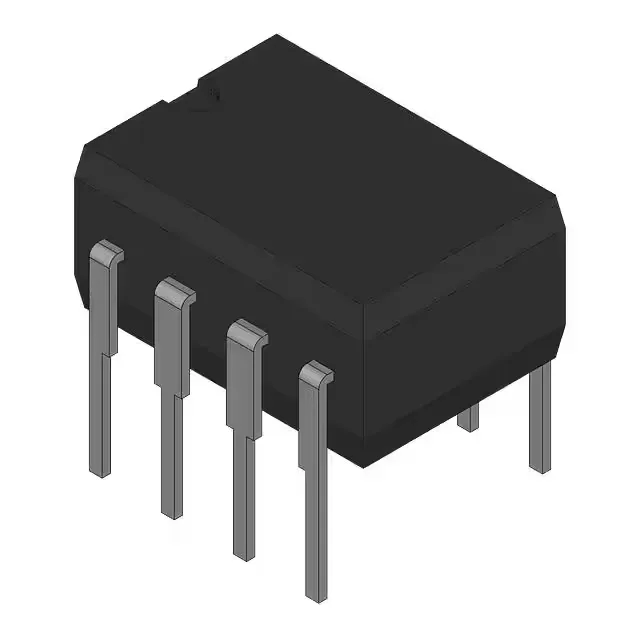
Hermetic dual op-amp for harsh environments
The 5962-0051205QPA: Supply span runs from 2.7 V to 6 V, drawing 550 µA per channel quiescent. This is a part built for sealed, high-reliability assemblies — avionics, satellite payloads, downhole instrumentation, and military-grade control loops where a plastic package won't pass the environmental screen.
8-CDIP: the hermetic footprint
The 8-lead ceramic DIP (CDIP) with 0.300" body width is the standard hermetic footprint for through-hole high-reliability designs. It mates to a standard 0.1" pitch socket or can be soldered into plated through-holes. The ceramic body seals the die against moisture and contaminants — essential for long-life missions where conformal coating alone isn't enough. Store the reels dry; the ceramic package itself is not moisture-sensitive, but the leads are tin-lead (RoHS non-compliant per the listing), so plan your assembly line accordingly if you're running lead-free only.
6.4 MHz GBW and 1.6 V/µs — what it handles
For a hermetic military-grade part, that's a stable sourcing position — these tend to stay active for decades because the customer base (defence, aerospace) demands long production runs. The AEC-Q100 qualification also signals a robust process line. If you're stocking for a multi-year program, this one isn't going EOL next quarter.
RoHS non-compliant — plan for it
The leads are almost certainly tin-lead solder finish, which is standard for hermetic military/space-grade components. If your assembly line is restricted to lead-free solder, you'll need a waiver or a separate hand-solder station with tin-lead paste. This is a common situation for high-rel parts — the exemption for military and aerospace applications still holds in most jurisdictions. Just don't let it surprise your BOM compliance checker.