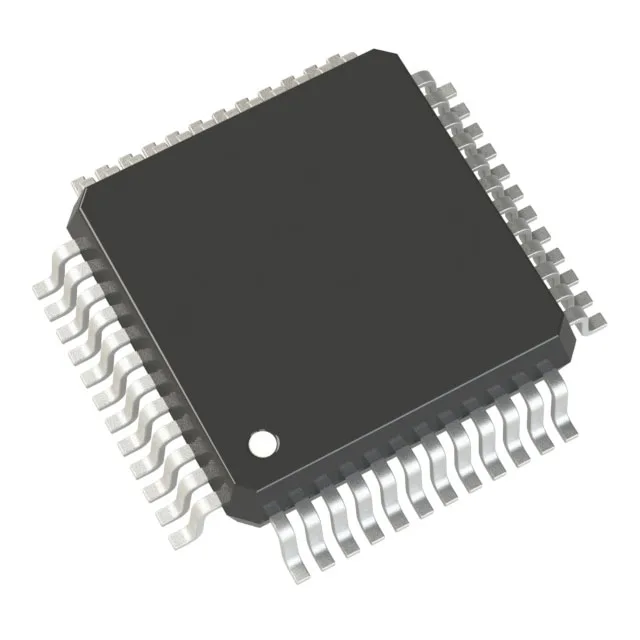
STMicroelectronics STM8S007C8T6TR — Microcontrollers & Processors (MCU / MPU / DSP)

STM8S007C8T6TR 8-bit MCU, 64KB Flash, 24MHz, 48-LQFP

MPNSTM8S007C8T6TR
Active

STMicroelectronics STM8S007C8T6TR, STM8S series 8-bit MCU, 24MHz core, 64KB Flash, 6KB RAM, 128B EEPROM, 38 I/O, 2.95V-5.5V, -40 to 85°C, 48-LQFP (7x7 mm), Tape & Reel.

$2.7300Ref. price · indicative, final on quote
Packaging48-LQFP
RoHSROHS3 Compliant
SeriesSTM8S
Independent supplier — new & surplus stockAuthenticity-screened · ESD-safe packingListing updated Aug 2026

Specifications

STM8S007C8T6TR specifications
ParameterValue
SeriesSTM8S
MountingSurface Mount
Oscillator typeInternal
Program memory typeFLASH
Voltage - supply (Vcc (Vdd))2.95V ~ 5.5V
Operating temperature-40°C ~ 85°C (TA)
Speed24MHz
PackageTape & Reel (TR) Cut Tape (CT)
RAM size6K x 8
Core size8-Bit
EEPROM size128 x 8
PeripheralsBrown-out Detect/Reset, POR, PWM, WDT
ConnectivityI²C, IrDA, LINbus, SPI, UART/USART
Number of i (O)38
Core processorSTM8
Case48-LQFP
Data convertersA/D 16x10b
Program memory size64KB (64K x 8)

Product details

64 KB Flash, 24 MHz — the industrial 8-bit workhorse

The STMicroelectronics STM8S007C8T6TR is an 8-bit STM8S-series microcontroller built around the STM8 core, clocked at 24 MHz.

24 MHz core — timing budget for real-time control

At 24 MHz, the STM8S007C8T6TR delivers enough instruction throughput for PWM generation, UART communication at standard baud rates, and interrupt-driven sensor polling. If you need precise timing for a motor commutation loop or a LIN bus node, the 24 MHz clock gives you a 41.7 ns instruction cycle — adequate for the control loops this class of part targets.

Memory layout — Flash, RAM, and EEPROM sizing

The 6 KB of RAM is the hard limit for runtime variables, stack depth, and DMA buffers — enough for a few hundred sensor readings or a small display frame buffer but not for large image processing. The 128 bytes of EEPROM is useful for storing calibration constants, unit IDs, or configuration parameters that survive a power cycle; it saves adding an external serial EEPROM for small persistent data.

The 10-bit ADC with 16 channels covers multi-sensor acquisition without an external ADC. The brown-out detect resets the MCU cleanly when the supply dips, which is critical in noisy industrial or automotive environments where a glitch could corrupt the program counter.

Package and footprint — 48-LQFP, 7x7 mm

The 38 I/O pins leave headroom for a parallel LCD bus, multiple sensor interfaces, and a few spare GPIOs for board-level signalling. The Tape & Reel variant (TR suffix) is the production-friendly format for pick-and-place assembly.

Lifecycle status — active production, no EOL concern

The ROHS3 compliance is confirmed.

For a production BOM line requiring the STM8S007C8T6TR, the active lifecycle means supply continuity without the premium pricing that accompanies NRND or EOL parts.

Frequently asked questions

What is the price of STM8S007C8T6TR and is it available via RFQ confirmation?

Submit an RFQ through this listing to receive a current price and availability commitment for the STM8S007C8T6TR.

What are the alternatives to STM8S007C8T6TR?

The STM8S007C8T6TR is an 8-bit STM8 core part; the STM32L151 is a 32-bit, lower-voltage (1.8 V) device with a different architecture and peripheral set. For a same-family alternative, look at other STM8S series MCUs in the 48-LQFP package with comparable Flash and RAM.

Which development tools support STM8S007C8T6TR?

STMicroelectronics provides the ST Visual Develop (STVD) IDE and the STVP programming tool for the STM8S family. The ST-Link/V2 debugger/programmer supports the SWIM (Single Wire Interface Module) protocol used by STM8 devices. Third-party toolchains from Cosmic, IAR, and Raisonance also support the STM8 core.

How to program STM8S007C8T6TR?

Programming uses the SWIM (Single Wire Interface Module) protocol through the ST-Link/V2 debugger. The SWIM pin is a dedicated single-wire interface for programming and debugging. ST's STVP tool or a compatible IDE (STVD, IAR, Cosmic) handles the flash programming.