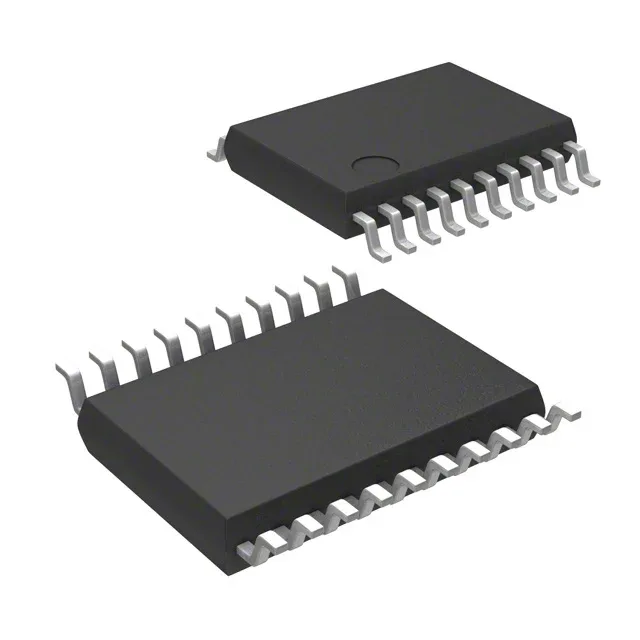
STM8S003F3P6 — 8-bit MCU for cost-sensitive control applications
The STMicroelectronics STM8S003F3P6 is an 8-bit microcontroller from the STM8S value line, built around the STM8 core running at 16 MHz.
The 16 MHz maximum clock speed is the ceiling for instruction execution on this 8-bit STM8 core. At 16 MHz, a single-cycle instruction completes in 62.5 ns. For a typical control loop reading an ADC sample, processing a PID term, and updating a PWM duty cycle, the 16 MHz rate provides enough headroom for loop rates up to several tens of kilohertz. If your application requires faster data processing or higher PWM resolution, the 16 MHz limit is a hard constraint — the part cannot be overclocked beyond the rated maximum.
Memory sizing: 8 KB Flash, 1 KB RAM, 128 B EEPROM
The 8 KB Flash program memory (8K x 8) is sufficient for small firmware images — bootloader, main control loop, and a modest peripheral driver set. The 1 KB SRAM (1K x 8) limits data buffering; a UART receive buffer of 256 bytes consumes 25% of available RAM. The 128-byte EEPROM (128 x 8) is useful for storing calibration constants, configuration parameters, or fault logs that must survive power loss. For applications needing larger data tables or extensive logging, consider stepping up to a higher-density STM8S variant with more Flash and RAM.
At 5 V operation, the GPIO drive strength is higher, which can directly drive small relays or LEDs without a buffer.
It is ROHS3 compliant. There is no official second-source alternate listed; the STM8S series is a proprietary ST architecture, so a drop-in replacement from another vendor does not exist. If dual-sourcing is a requirement, the closest functional alternative is the STM32L151CBU6A, but that is a 32-bit ARM Cortex-M3 part in a different package (UFBGA) with a different pinout — not a pin-compatible swap.