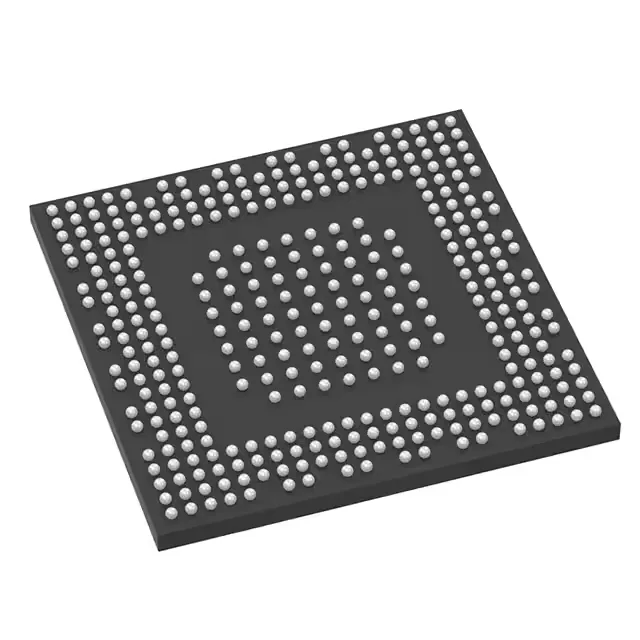
STMicroelectronics STM32MP157FAC1 — Microcontrollers & Processors (MCU / MPU / DSP)

STM32MP157FAC1 MPU, ARM Dual Cortex-A7 800 MHz, 361-TFBGA

MPNSTM32MP157FAC1
End of Life

STMicroelectronics STM32MP1 series, STM32MP157FAC1, Microprocessor, ARM Cortex-A7, 800MHz, 209MHz, 2 Core 32-Bit, 361-TFBGA, Surface Mount, -20°C to 105°C.

$26.57Ref. price · indicative, final on quote
Packaging361-TFBGA
SeriesSTM32MP1
Independent supplier — new & surplus stockAuthenticity-screened · ESD-safe packingListing updated Aug 2026

Specifications

STM32MP157FAC1 specifications
ParameterValue
SeriesSTM32MP1
MountingSurface Mount
Voltage - i (O)2.5V, 3.3V
Additional interfacesCAN, Ethernet, I²C, MMC/SD/SDIO, SPDIF, SPI, UART, USB
Display & interface controllersHDMI-CEC, LCD
Operating temperature-20°C ~ 105°C (TJ)
Number of cores (Bus width)2 Core, 32-Bit
USBUSB 2.0 (2), USB 2.0 OTG+ PHY (3)
Speed209MHz, 800MHz
PackageTray
Ethernet10/100Mbps, GbE
Core processorARM® Cortex®-A7
Case361-TFBGA
RAM controllersDDR3, DDR3L, LPDDR2, LPDDR3
Co-Processors (DSP)ARM® Cortex®-M4
Security featuresARM TZ
Graphics accelerationYes

Product details

Dual-core architecture for Linux + real-time control

The STM32MP157FAC1 is a heterogeneous MPU from ST's STM32MP1 series, pairing a dual ARM Cortex-A7 at 800 MHz with a Cortex-M4 coprocessor at 209 MHz. The A7 cluster runs Linux or Android application stacks; the M4 handles deterministic control loops, sensor fusion, or low-latency I/O without jitter from the OS scheduler. Memory interface supports DDR3, DDR3L, LPDDR2, and LPDDR3, so the same PCB layout can be tuned for cost (DDR3) or low-power (LPDDR3) depending on the thermal budget.

Five USB ports are on-chip: two USB 2.0 host controllers and three USB 2.0 OTG ports with integrated PHY. That saves external USB hub silicon when the design needs a keyboard, a thumb drive, a cellular modem, and a debug port simultaneously. Gigabit Ethernet (GbE) and a 10/100 Mbps MAC are both present, so the same part can serve as a protocol gateway between a legacy 100BASE-TX field network and a backbone GbE uplink. Display and graphics are handled by an integrated LCD controller and HDMI-CEC interface, with hardware graphics acceleration confirmed. For touch-panel HMIs or dashboard displays, the part drives the panel directly without an external GPU. Security is covered by ARM TrustZone (ARM TZ), which isolates secure boot, key storage, and authenticated firmware updates from the application OS. Additional wired interfaces include CAN, I²C, SPI, UART, MMC/SD/SDIO, and SPDIF — enough to cover motor drive encoder feedback, sensor buses, and audio pass-through without external bridge chips.

Rated for -20°C to 105°C (TJ).

Frequently asked questions

Is STM32MP157FAC1 compatible with Linux?

Yes. The dual Cortex-A7 cluster is designed to run mainline Linux or Android. ST provides a Yocto / OpenSTLinux distribution with BSP support for the STM32MP1 series, including the FAC1. The Cortex-M4 runs bare-metal or RTOS code (FreeRTOS, etc.) for real-time tasks.

What is the closest pin-compatible alternative to STM32MP157FAC1?

Within the STM32MP1 family, the STM32MP157CAC1 is a pin-compatible alternative in the same 361-TFBGA package. It differs in the maximum Cortex-A7 frequency but shares the same memory controller, USB count, and graphics engine. For a lower-cost variant, the STM32MP153 series (dual A7, no M4) may fit if the real-time core is not needed — but that changes the architecture, not just the frequency.