Dual-core asymmetric processing: Cortex-A7 at 650 MHz, Cortex-M4 at 209 MHz
The STM32MP151AAC3 pairs a 650 MHz ARM Cortex-A7 application core with a 209 MHz ARM Cortex-M4 real-time coprocessor. The A7 runs Linux or an RTOS for the UI and networking stack; the M4 handles deterministic control loops, sensor fusion, or motor commutation without jitter from the OS scheduler. This asymmetric architecture means a single chip replaces what used to require a separate MPU and MCU, saving a PCB spin and the inter-processor communication link.
Memory controller flexibility: DDR3, DDR3L, LPDDR2, LPDDR3
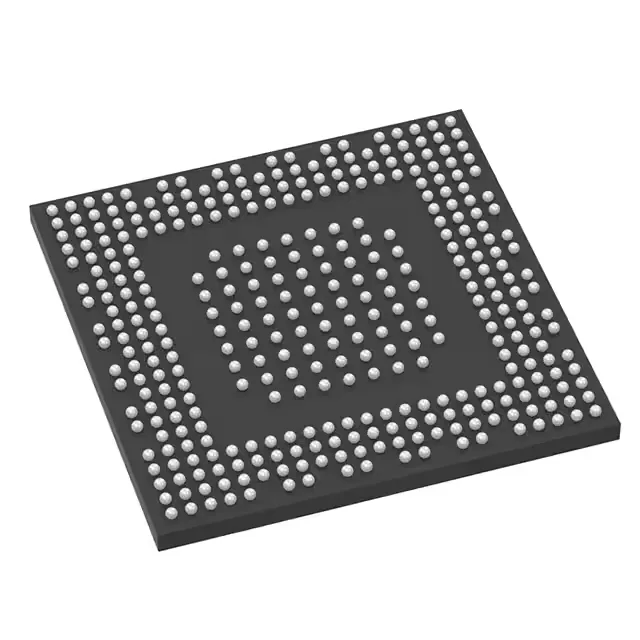
The integrated DRAM controller supports four memory types — DDR3, DDR3L, LPDDR2, and LPDDR3. This lets the designer pick the cheapest or lowest-power option available at the time of BOM procurement without changing the PCB layout. The 361-TFBGA (12x12 mm) package requires a 4-layer or 6-layer board for signal integrity on the DDR bus; the 0.50 mm ball pitch demands careful fan-out on the top layer.
Connectivity: dual Ethernet and USB 2.0 OTG with integrated PHY
The part carries two Ethernet MACs — one 10/100 Mbps and one Gigabit Ethernet — so it can bridge a legacy fieldbus to a modern industrial Ethernet backbone without an external switch chip. Three USB 2.0 OTG ports with integrated PHY mean no external transceiver for the OTG role; two additional USB 2.0 host/device ports round out the peripheral set. The integrated PHY saves roughly $0.50–$1.00 per port in BOM cost and frees board area.
The 125°C upper limit covers engine-bay or solar-inverter deployments where the enclosure sees direct sun and internal heating.