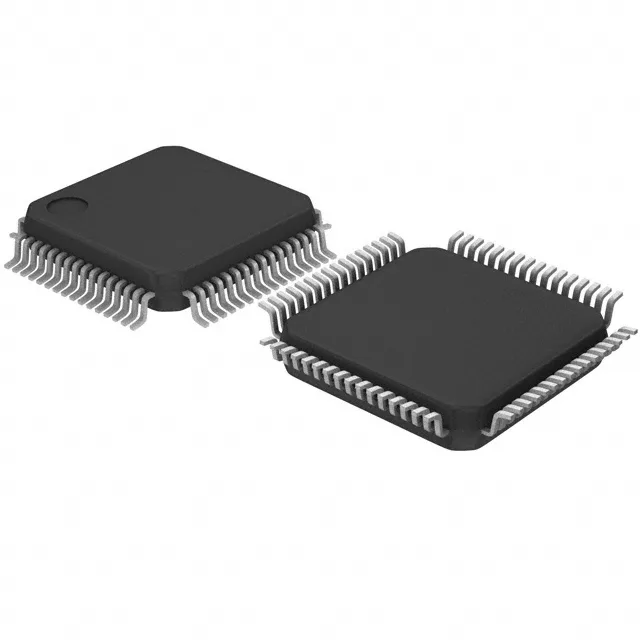
STMicroelectronics STM32L496RGT6TR — Microcontrollers & Processors (MCU / MPU / DSP)

STM32L496RGT6TR STM32L4 MCU, 80MHz Cortex-M4, 1MB Flash

MPNSTM32L496RGT6TR
Active

STMicroelectronics STM32L4 series ARM Cortex-M4 32-bit MCU, STM32L496RGT6TR, 80MHz, 1MB Flash, 320KB RAM, 52 I/O, 64-LQFP, -40 to 85°C, Tape & Reel.

$11.5600Ref. price · indicative, final on quote
Packaging64-LQFP
RoHSROHS3 Compliant
SeriesSTM32L4
Independent supplier — new & surplus stockAuthenticity-screened · ESD-safe packingListing updated Aug 2026

Specifications

STM32L496RGT6TR specifications
ParameterValue
SeriesSTM32L4
MountingSurface Mount
Oscillator typeInternal
Program memory typeFLASH
Voltage - supply (Vcc (Vdd))1.71V ~ 3.6V
Operating temperature-40°C ~ 85°C (TA)
Speed80MHz
PackageTape & Reel (TR) Cut Tape (CT)
RAM size320K x 8
Core size32-Bit Single-Core
PeripheralsBrown-out Detect/Reset, DMA, LCD, PWM, WDT
ConnectivityCANbus, I²C, IrDA, LINbus, MMC/SD, QSPI, SAI, SPI, SWPMI, UART/USART, USB OTG
Number of i (O)52
Core processorARM® Cortex®-M4
Case64-LQFP
Data convertersA/D 16x12b SAR; D/A 2x12b
Program memory size1MB (1M x 8)

Product details

80 MHz Cortex-M4 with 1 MB Flash — processing headroom for mixed-signal control

The STM32L496RGT6TR: That memory split gives enough room for a real-time OS, a moderate application stack, and a communications buffer without hitting the ceiling on a complex control loop. 52 general-purpose I/O lines in a 64-LQFP package mean you get a usable number of pins for sensors, actuators, and a parallel LCD interface without jumping to a larger footprint. The 10x10 mm body reflows cleanly with a standard hot-air profile — the exposed pad pulls heat evenly, so the part is less prone to tombstoning than a finer-pitch QFN.

Connectivity and data conversion — USB OTG, CAN, dual 12-bit DAC

On the peripheral side, this MCU carries USB OTG, CANbus, multiple SPI/I²C/UART interfaces, and a QSPI for external Flash or RAM expansion. The 16-channel 12-bit SAR ADC and dual 12-bit DAC cover analog front-end tasks — a sensor hub reading multiple channels and outputting a control voltage, for example, runs without an external converter.