What the 3 A output and dropout voltage mean for your rail
The LD1085P delivers up to 3 A continuous output from an adjustable positive rail, with a maximum dropout voltage of 1.5 V at full load — so the input must stay at least 1.5 V above the set output voltage to keep the pass element in regulation. That headroom matters when you're running off a loosely regulated 5 V rail and need a clean 3.3 V for an analog front-end: a 5 V input with 10 % tolerance dips to 4.5 V, leaving only 1.2 V headroom against a 3.3 V output — not enough margin at 3 A, so you'd either pre-regulate or select a lower-dropout part. The single regulator topology means the pass transistor handles the full dropout voltage at 3 A — thermal management in the TO-220FP package is the real limiter, not the current spec.
PSRR and noise rejection in analog supplies
Power supply rejection ratio is listed at 72 dB at 120 Hz — that's the ripple rejection from a full-wave rectified mains supply. At 120 Hz, 72 dB attenuation means a 1 V pk-pk ripple on the input drops to about 250 µV pk-pk at the output. For a 12-bit ADC with a 3.3 V reference, that residual ripple sits below 1 LSB at the reference input, so the LDO alone can clean up a poorly filtered bulk supply for precision analog rails. The quiescent current is 10 mA — not a low-Iq part for battery-powered sleep modes, but acceptable for a 3 A regulator powering always-on analog circuitry where the load current dominates the efficiency calculation.
Temperature range and protection for industrial environments
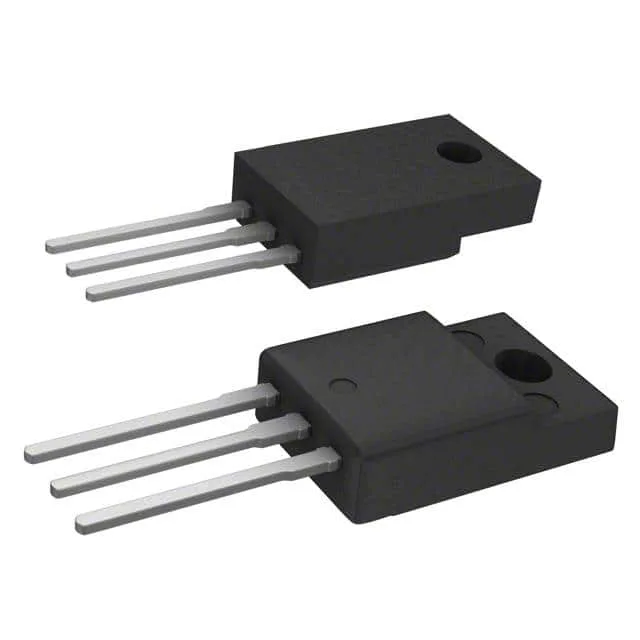
The TO-220FP (full-pack, isolated tab) package means the backside tab is electrically isolated from the die — no mica washer or insulating pad needed when bolting to a heatsink, which simplifies assembly in a crowded enclosure. Built-in protection includes over-current and over-temperature shutdown. The thermal shutdown prevents die damage during a sustained overload, but it's a latch-off or auto-restart depending on the die temperature — don't rely on it as a regular operating limit; size the heatsink to keep the junction below 125°C at your worst-case load.