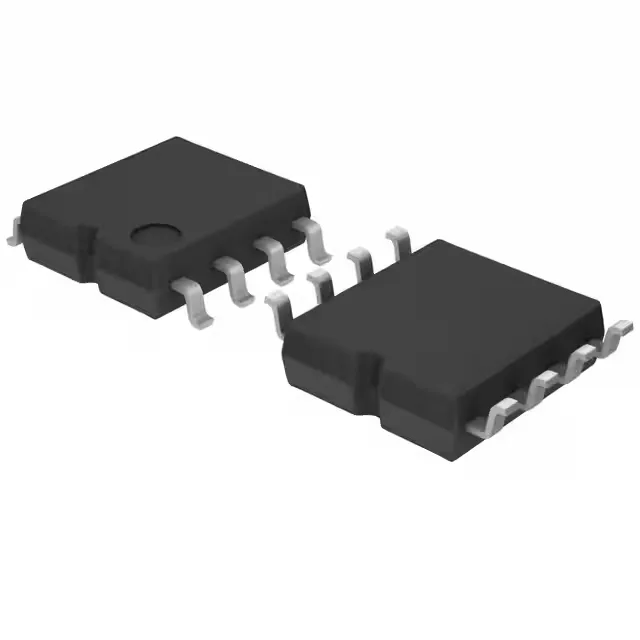
ROHM Semiconductor BR93L76F-WE2 — Interface & Transceivers

BR93L76F-WE2 EEPROM, 8Kbit, 2 MHz Microwire, 8-SOIC

MPNBR93L76F-WE2
End of Life

ROHM BR93L76F-WE2 EEPROM, 8Kbit (512 x 16), Microwire interface, 2 MHz clock, 1.8V-5.5V supply, -40°C to 85°C, 8-SOIC surface mount.

$0.53Ref. price · indicative, final on quote
Packaging8-SOIC (0.173", 4.40mm Width)
RoHSROHS3 Compliant
Independent supplier — new & surplus stockAuthenticity-screened · ESD-safe packingListing updated Jul 2026

Specifications

BR93L76F-WE2 specifications
ParameterValue
Memory typeNon-Volatile
MountingSurface Mount
Voltage1.8V ~ 5.5V
Frequency2 MHz
Memory interfaceMicrowire
Operating temperature-40°C ~ 85°C (TA)
PackageTape & Reel (TR); Cut Tape (CT)
TechnologyEEPROM
Memory size8Kbit
Memory formatEEPROM
Case8-SOIC (0.173\", 4.40mm Width)
Memory organization512 x 16
Write cycle time - word, page5ms

Product details

The ROHM BR93L76F-WE2 is an 8Kbit serial EEPROM organized as 512 x 16 bits, accessed over a Microwire interface at up to 2 MHz. It operates from a single 1.8V to 5.5V supply, covering both legacy 5V logic and modern 3.3V or 1.8V core rails. The 8-SOIC package (0.173" body width, 4.40mm) is a common footprint for parameter storage, calibration constants, or small firmware look-up tables in industrial controls, telecom modules, and consumer appliances.

2 MHz clock — bus timing and throughput

The 2 MHz clock rate is the Microwire bus speed. At this rate a 16-bit word read takes about 8 µs plus the 5 ms write cycle for a page or word write. For designs that store configuration data updated infrequently (once per power-up or on a field-calibration event), the write speed is adequate. If the application streams data into EEPROM at high rates, the 5 ms write-cycle time becomes the bottleneck — consider a larger page-size or faster-write EEPROM family.

The wide supply range means the BR93L76F-WE2 can sit on a 5V legacy bus without a level shifter, or on a 3.3V or 1.8V microcontroller rail. The Microwire interface is not SPI, but the timing is similar — the chip select, clock, and data-in/data-out lines are straightforward to bit-bang or drive from a dedicated Microwire peripheral. The 1.8V minimum supply is low enough for battery-powered handheld gear that runs down to that rail.

The 8-SOP (supplier device package 8-SOP) is the same 8-SOIC footprint used across many EEPROMs and small logic devices — no board re-spin if you switch from another 8-pin EEPROM in the same density.

ROHS3 compliant.

Frequently asked questions

Is BR93L76F-WE2 lead-free and RoHS compliant?

Yes, it is ROHS3 compliant.

Is BR93L76F-WE2 compatible with SPI?

No, it uses a Microwire interface, not SPI. Microwire is a three-wire serial protocol (clock, data in, data out with chip select) — similar but not pin-compatible with SPI without firmware or logic adaptation.

What are the alternatives to BR93L76F-WE2?

Within the same ROHM family, the BR93G46FVM-3AGTTR is a 1Kbit device with a 3 MHz clock and 1.7V minimum supply — lower density but faster bus. The BR93A46RFVT-WME2 is a 1Kbit automotive-grade (AEC-Q100) part with 2 MHz clock and -40°C to 105°C range. For higher density, the BR93H86RF-WCE2 offers 16Kbit at 1.25 MHz with automotive qualification and -40°C to 125°C. None are direct pin-for-pin replacements at the same density; evaluate memory organization and package before substituting.