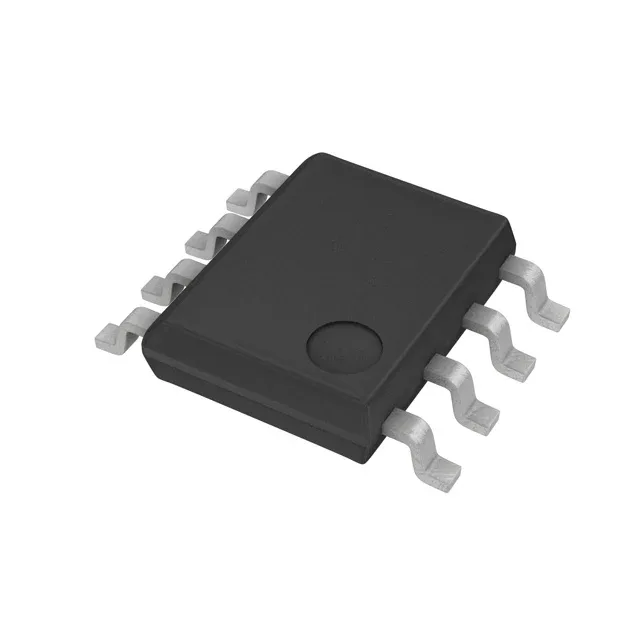
Automotive-grade 16Kbit SPI EEPROM for under-hood calibration storage
The ROHM BR25H160FJ-2CE2 is a 16Kbit serial EEPROM with an SPI interface, organized as 2K x 8 bits. The SPI clock runs at 10 MHz, which allows fast read/write access for parameter storage, calibration tables, and configuration data that an MCU needs to pull at boot without stalling the bus. Supply voltage spans 2.5V to 5.5V, so it works directly on 3.3V and 5V logic rails without an external regulator or level translator — a common question for design-in decisions.
SPI at 10 MHz versus I2C and Microwire peers
Compared to the BR24T16FVM-WTR, which uses an I2C interface limited to 400 kHz, the BR25H160FJ-2CE2's 10 MHz SPI bus offers a 25x faster clock rate. That matters when the host MCU polls calibration data at power-on or during a firmware update cycle where bus throughput sets the window. The BR93H86RF-WCE2 runs a Microwire interface at 1.25 MHz and shares the same 125°C temperature grade and AEC-Q100 pedigree, but its 1K x 16 organization differs from the 2K x 8 layout here — software teams need to account for the word-width difference in the driver layer.
That means it can be specified into a new production BOM without planning a last-time buy or qualifying a replacement mid-cycle.