What the voltage ratings mean for your circuit
The 5KP24A_R2_00001: When a transient pushes the line above the 26.7 V minimum breakdown, the device avalanche-clamps and conducts — the clamping voltage ceiling is 38.9 V at the rated 128 A peak pulse current. That 14.9 V differential between breakdown and clamping is the headroom the downstream load sees during a surge event. The 10/1000 µs waveform shape matters — this rating is calibrated to the common lightning-surge and inductive kick waveform, not to fast-edge transients; the clamping ceiling rises on shorter pulses.
5 kW peak pulse and the P600 package
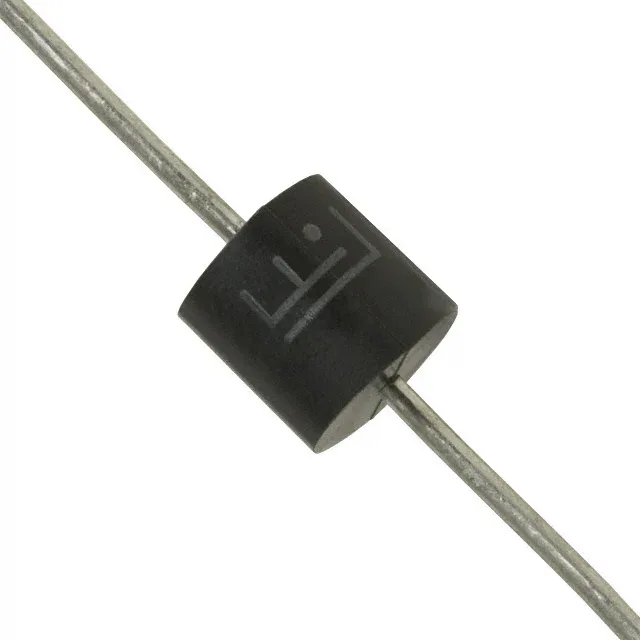
5000 W peak pulse dissipation at a 10/1000 µs waveform sets the surge-handling ceiling — the 128 A peak pulse current rating is the other half of the survivability envelope. Both figures must be within the downstream protection circuit's withstand budget. P600 axial package is a through-hole body — it mounts directly into a PCB hole and takes the transient energy dissipation across the package leads, so lead dress and PCB trace width at the pad affect real-world clamping performance. Junction temperature rating of -55°C to 175°C puts this in the high-temperature industrial and automotive-adjacent band — the upper limit is set by the junction, not the ambient, so thermal relief on the PCB pads matters for sustained-clamp events.
Active sourcing posture
The 5KP24A_R2_00001 is listed Active under Panjit International Inc. — this is a long-run 5KP series Zener TVS, which is a widely supported family across multiple manufacturers, so BOM consolidation with this specific code is straightforward through independent distribution. Tape-and-reel and cut-tape packaging options support both production and service-stock stocking strategies.