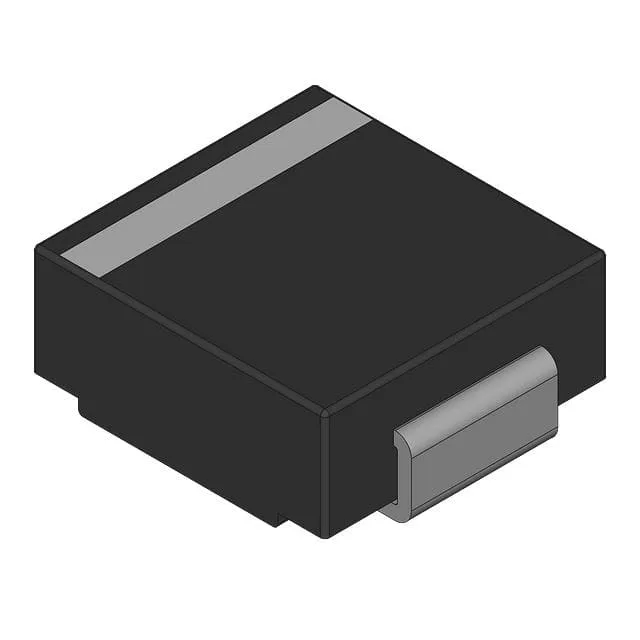
What 30 V standoff and 48.4 V clamping mean for the protected node
The 1.5SMCJ30CA_R1_00001: Reverse standoff is 30 V typ — the diode idles off the bus with minimal leakage below this level, so a 24 V nominal rail has comfortable headroom. Breakdown minimum is 33.3 V, which is where it starts conducting hard. At a 31 A peak pulse the clamping voltage max is 48.4 V — that is what the downstream IC sees if a surge hits the input. For a 30 V rail that 18.4 V overdrive margin sits above the working voltage but below what most downstream regulators can tolerate long-term, so the TVS is doing the job.
Operating junction temperature runs -55 °C to 150 °C, which covers outdoor enclosures, engine-adjacent bays, and any industrial environment without active cooling. The upper limit is junction-limited, not ambient — the board thermal design determines whether the part stays below 150 °C at steady state. The 150 °C ceiling is notably above most commercial-grade TVS diodes, so this is one of the deciding factors if you are specifying for a hot environment.