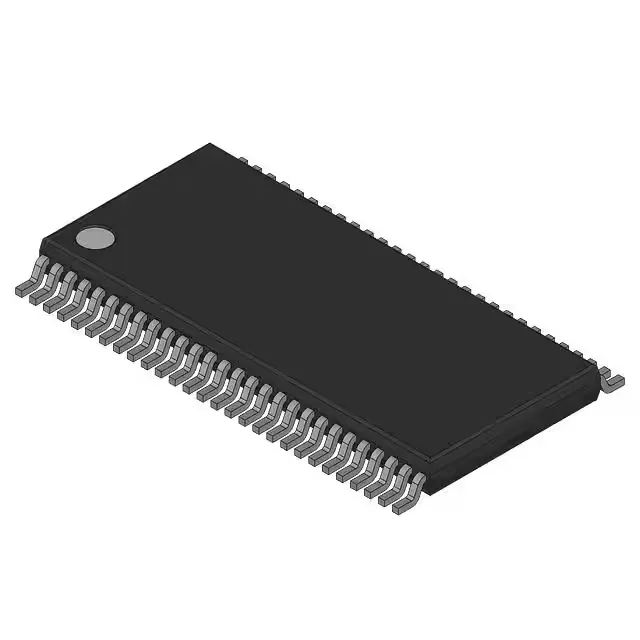
The Cypress CY28329ZC is a processor-specific clock generator that combines three functions in one 56-pin TSSOP package: a clock driver, a clock synthesizer, and a spread-spectrum clock generator. It accepts either an LVTTL reference or a crystal input, and with an integrated PLL it synthesizes and distributes up to 24 clock outputs running at frequencies up to 133 MHz. The 1:24 input-to-output ratio means a single reference clock can fan out to two dozen loads across a motherboard or baseboard, which saves board space and reduces the crystal count. Typical applications include desktop PC motherboards, embedded x86 systems, and any digital system that needs a clean, low-jitter clock tree for a processor chipset.
The maximum output frequency is 133 MHz. The 1:24 ratio lets one reference feed up to 24 loads.
Supply rail and temperature — the fit constraints
Spread-spectrum capability — why it matters for EMI
The spread-spectrum clock generation feature modulates the output frequency to spread the radiated energy across a wider band, reducing peak EMI emissions at the fundamental and harmonic frequencies. That is a practical advantage when a board is failing FCC or CE radiated emissions testing — a spread-spectrum clock can often drop the peak by several dB without changing the layout or adding shielding. The modulation profile and spread amount are set by the chip's configuration, so the design-in requires reading the programming details rather than just wiring the pins.
Package and mounting — 56-TSSOP II layout notes
The CY28329ZC comes in a 56-lead TFSOP package (0.240" body width, 6.10 mm) with a surface-mount footprint.