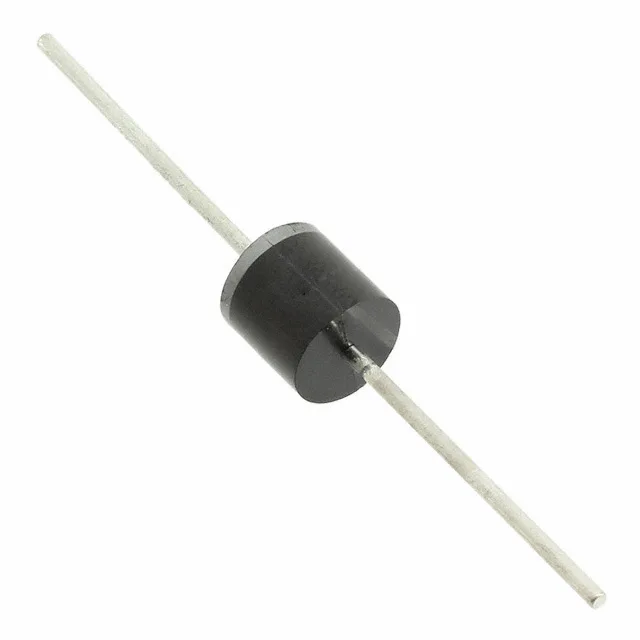
The 5KP130CA-G: The 5000 W peak pulse rating (10/1000 µs wave shape) tells you the energy this device can absorb in a single transient event before it fails short — sizing the TVS to the upstream source impedance and the load's withstand voltage is what makes the rating useful, not the number alone.
Standoff, breakdown, and clamping — the three numbers that select the part
Selecting a standoff comfortably above the working rail gives margin against premature triggering from supply noise. 144 V minimum breakdown is where avalanche conduction definitively starts; the 14 V gap between standoff and breakdown (vs) is the TVS's guard band — a tighter gap means faster response but less margin.
Axial R-6 package and thermal margins for power electronics
The R-6 axial through-hole body gives generous lead length for thermal dissipation into the PCB copper — the leads carry heat away from the junction, so the pad and trace area under the device matters more than the housing for continuous thermal management.
Bidirectional polarity and general-purpose deployment
The CA suffix confirms bidirectional polarity — both polarities of transient voltage are clamped symmetrically around ground. This matters on AC rails, transformer kickback nodes, and any circuit where the transient can swing either direction.