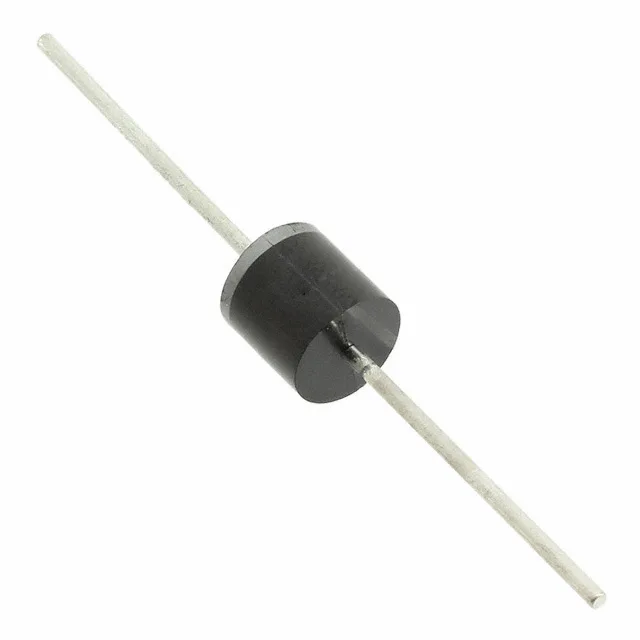
Unidirectional Zener TVS in the 5 kW class
The 5KP10A-G is a unidirectional Zener-type transient voltage suppressor — one-directional clamping against positive-going transients on the line.
What the voltage stack means for let-through
Reverse standoff is 10V typical — the bias the TVS sees in normal operation without conducting. Breakdown minimum is 11.1V, so the device does not begin conducting until the overvoltage clears 11.1V. The clamping maximum is 17V at the rated peak pulse current, which means the downstream circuit sees no more than 17V during a fault event — the 7V margin above standoff is the let-through window the protected circuitry must survive. That 294.12A peak pulse rating is specific to the 10/1000 µs waveform (a fast-rise, slow-decay surge typical of inductive load dump and switching transients). Rating varies with pulse shape — shorter, faster transients deliver higher peak currents at the same energy; check the V-I clamping curve for waveforms outside that 10/1000 µs envelope.
R-6 axial through-hole — where it lives in the panel
The R-6 axial package is a larger leaded format that predates the SMD TVS shift. Through-hole mounting means the leads pass the board and are wave-soldered — preferred in power-supply and industrial control panels where vibration and thermal cycling make solder-joint integrity a priority over board density. The tape-and-box packaging variant is oriented for high-volume automatic insertion lines. Operating junction temperature runs to 150°C with a rated ambient range of -55°C to 150°C(TJ). That upper limit gives meaningful headroom in enclosed panels that run hot — many commodity SMD TVS parts derate to 125°C maximum, leaving less margin in sealed enclosures without active cooling.
Active sourcing posture
Available to order through independent distribution. Confirm current pricing and lead time against your BOM quantity at RFQ.