8 GHz RF synthesizer — what the frequency ceiling means for your LO chain
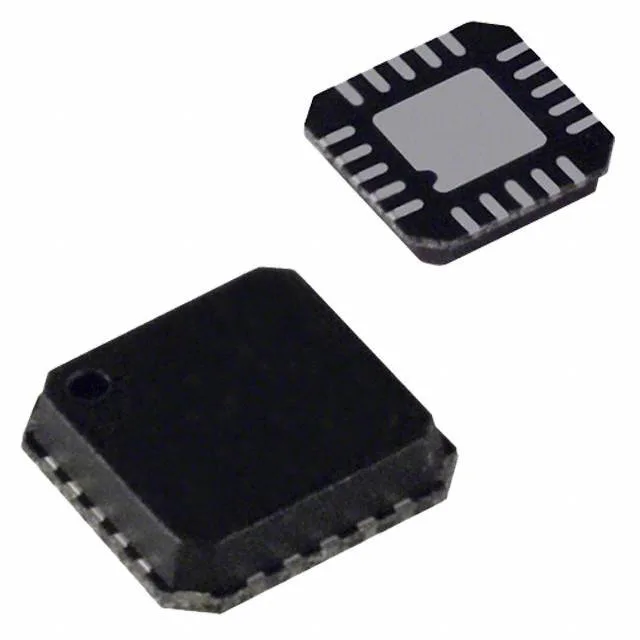
The ADF4108BCPZ-RL7 is a PLL-based clock/frequency synthesizer targeting RF local-oscillator generation up to 8 GHz. That 8 GHz max frequency covers C-band and lower X-band downconverters — think satellite downlinks, radar receivers, and 5G mmWave IF stages where the LO needs to lock above 6 GHz without a multiplier stage. Input accepts CMOS or TTL reference signals (ratio 2:1), output is a single-ended clock. The differential input path (Yes/No) means the reference can be a clean sine wave via a balun — common practice when the reference source is a crystal oscillator or an external signal generator. Supply range is 3.2 V to 3.6 V — a tight window. Any noise on the 3.3 V rail couples directly into the PLL phase detector and VCO tuning port, so a dedicated LDO with <10 µV output noise is the standard decoupling strategy for this part.
Package, footprint, and thermal management
The datasheet recommends a 4x4 mm pad on the PCB with a thermal via array to the ground plane; without it, the junction-to-board thermal resistance rises and the part derates above 85°C. The RL7 suffix indicates tape-and-reel packaging (7-inch reel). The same die is available in tray (ADF4108BCPZ) — the only difference is the shipping format, not the silicon.
Active lifecycle and compliance — no LTB risk on this line
The closest peer is the ADF4108BCPZ (tray) — functionally identical, same frequency spec, same supply range. The ADF4106 variants (6 GHz max) are a lower-frequency option if the design doesn't need the 8 GHz ceiling, but they also operate down to 2.7 V supply, which may simplify a 2.8 V rail design.